
Kgalagadi Transfrontier Park 28 May 2026
As we ventured along the Fourteenth Borehole loop road towards the picnic spot, I observed a female ostrich performing, what I thought, may be part of a mating ritual. This turned out to be one of the most theatrical and dramatic courtship rituals in the avian world – a sequence of wing-fanning, impressive kantling, corkscrewing neck displays and booming calls that unfolded over several intense minutes.
What follows is an exclusive 20-image post capturing the complete, rare sequence of the ostrich courtship ritual – from the initial submissive invitation to the explosive, rhythmic finale. (The actual sequence consisted of many hundreds of images).
However, before we continue, we need to come to terms with some of the avian nomenclature used for this particular behaviour:
“fluttering” – the female’s initial display. She walks with her head low, dropping her wings and fluttering them rapidly to signal her submission and readiness.
“kantling” – the official ornithological term for the rhythmic wing flapping and body swaying courtship display of a male ostrich.
“wing wave” – male whips his wings forwards and backwards like large feathered fans.
“Corkscrew” – the peak of the dance, his long neck contorts into a bizarre corkscrew motion.
” booming” – male’s neck inflated like a balloon as he begins to emit deep, hollow, booming calls.
“acceptance” – the female turns her back to the male, the ultimate biological green light.
The Invitation
It begins with the female. She signals her receptiveness with a loose, shivering display – wings dropped and fanned, body dipped low to the ground and fluttering them rapidly.
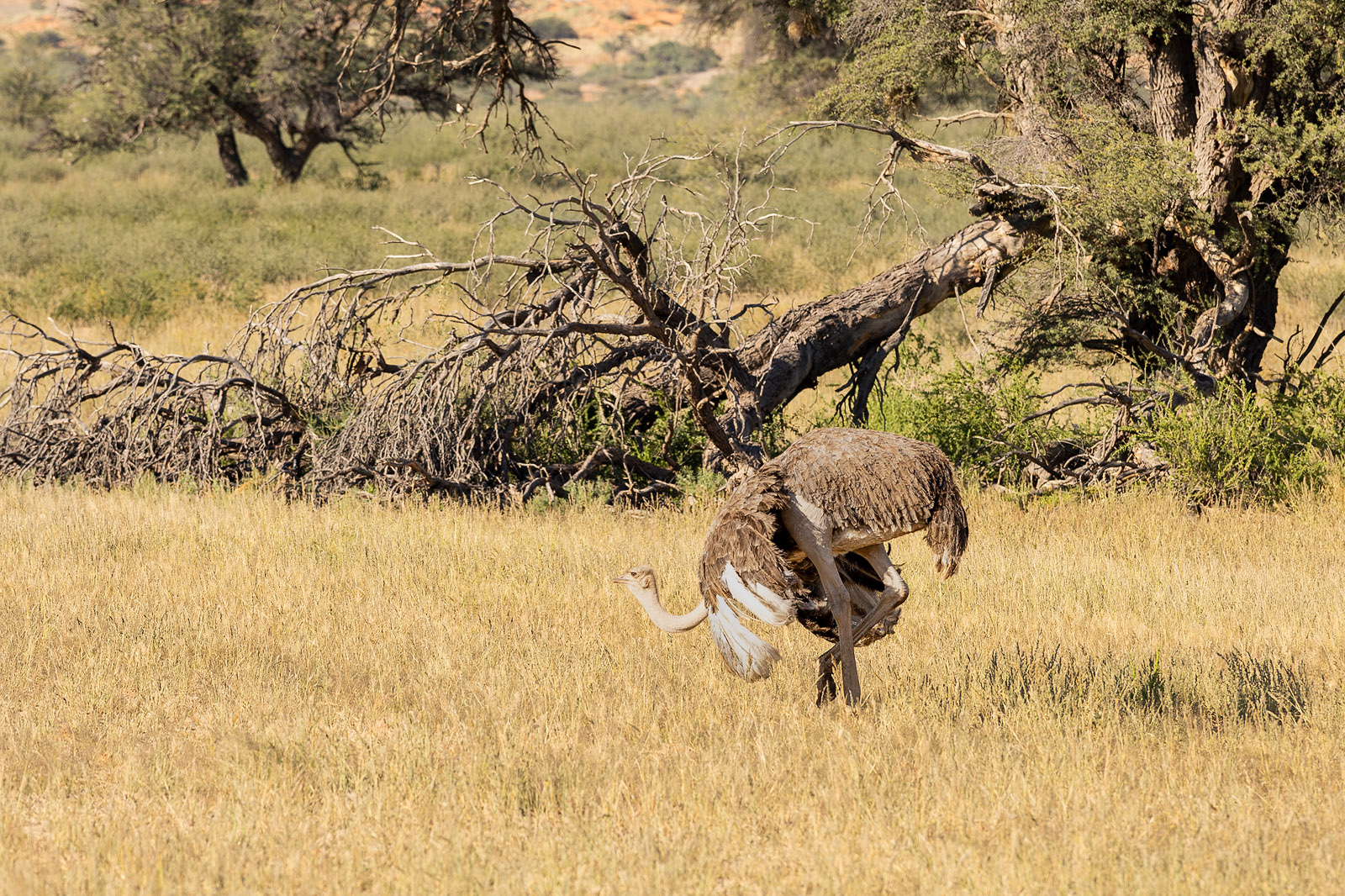
The female breaks into a shuffling run, wings loosely forward – an early invitation
At this stage, I had not yet seen a male. As we followed this female, I realised that something dramatic could happen and I changed my camera rig to the Canon EOS R1 with a Canon RF 400mm f/2.8L IS USM lens and a Canon RF extender 1.4x attached (effective focal length 560mm). As we followed this female a bit further down the road, I spotted the male. The female meanwhile had turned with her back to me and was still looking to her left.
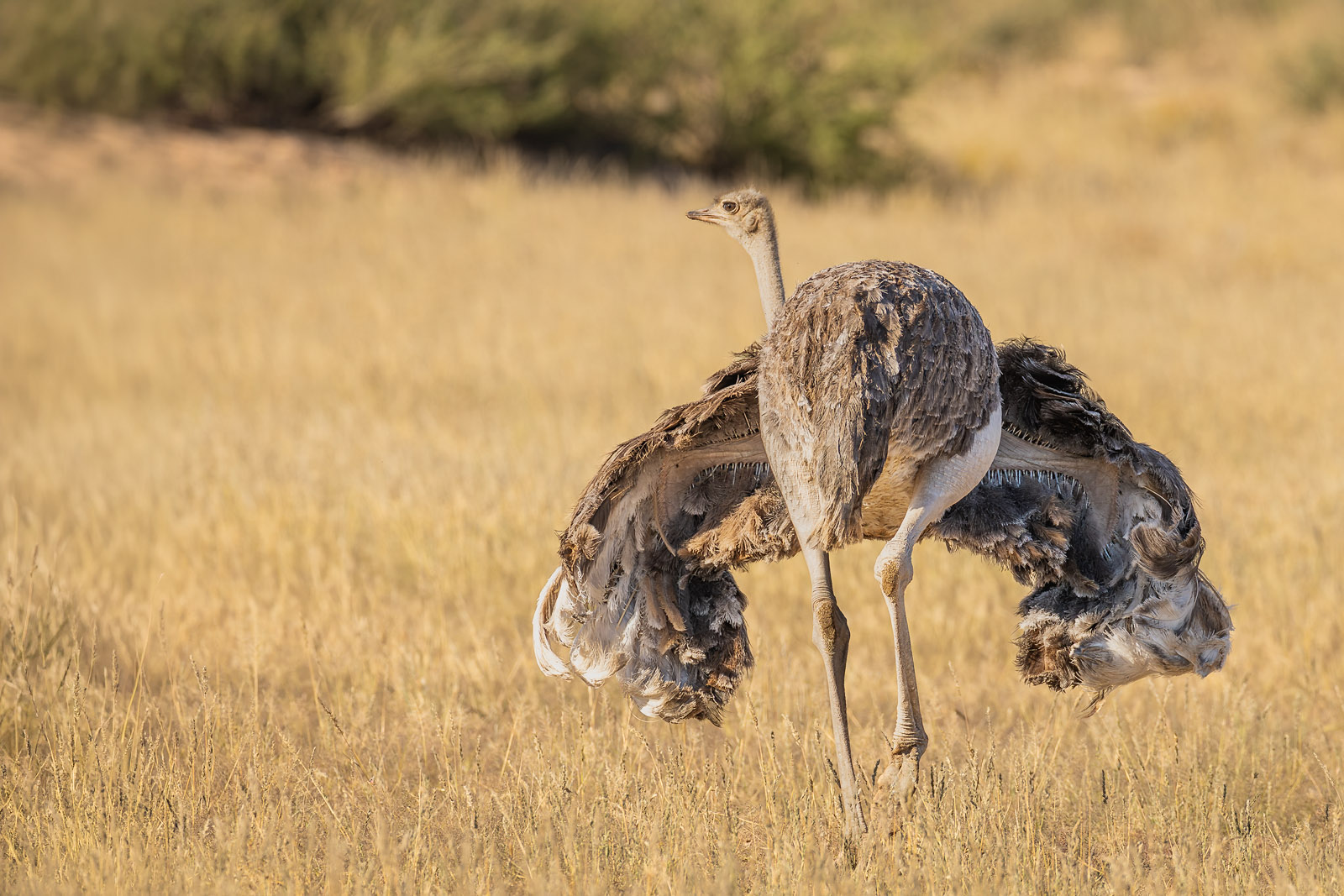
Facing away from the camera, her wings hang open on either side in the same soliciting posture
The Male Answers: Kantling
The male’s response is unmistakeable. He drops to the ground on folded legs, throws his neck back in a graceful S-curve against his body, and begins to swing his half-raised wings alternately – kantling. His plumage – jet black body feathers against a crown of white – flares open, catching the light with every sway.
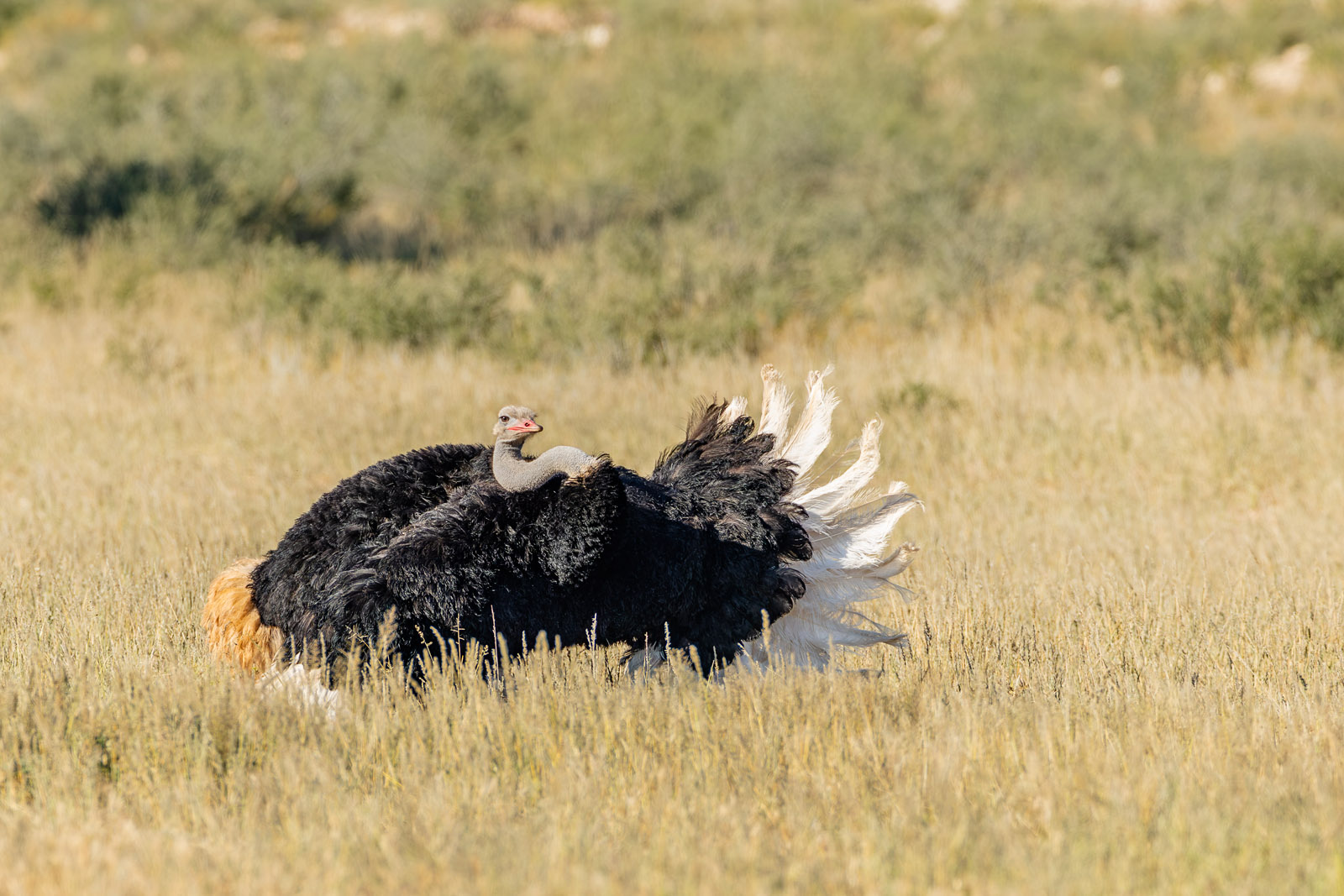
The male drops into his kantling posture, neck curled back over his body.
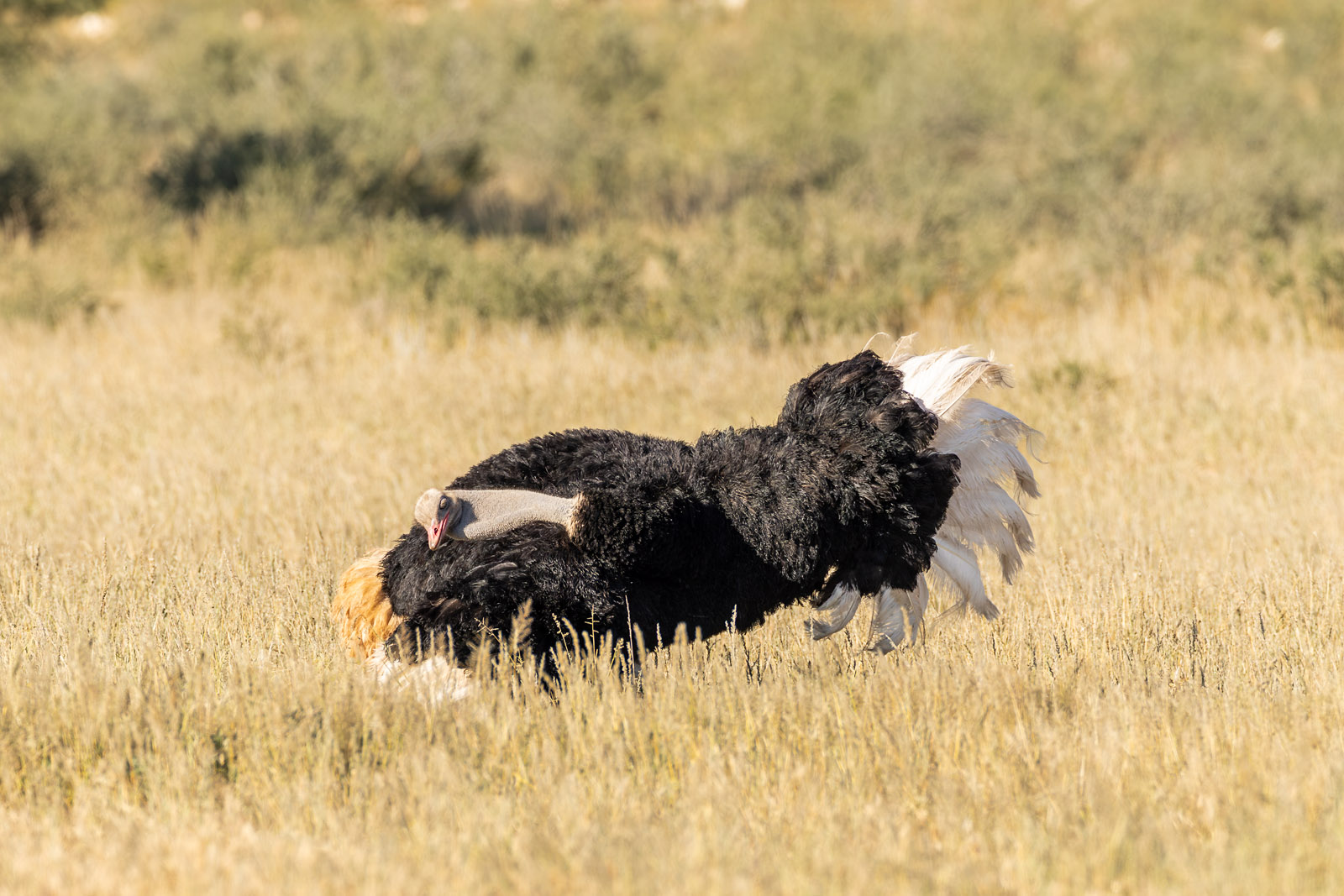
Wings alternate between open and closed in a rhythmic sway – the core of the kantling display.
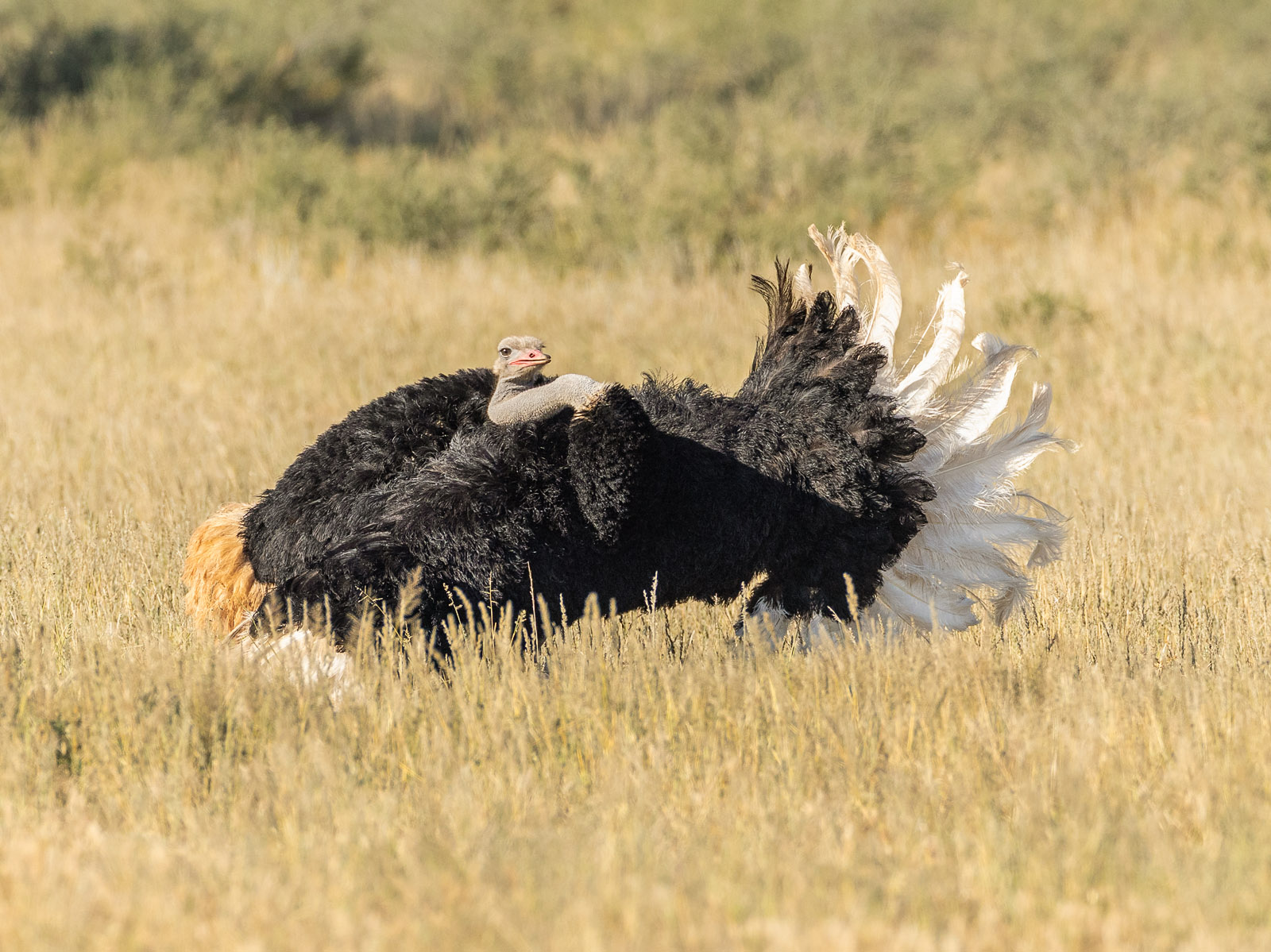
Feathers fully flared, the contrast of black body and white wing plumes is at its most dramatic.
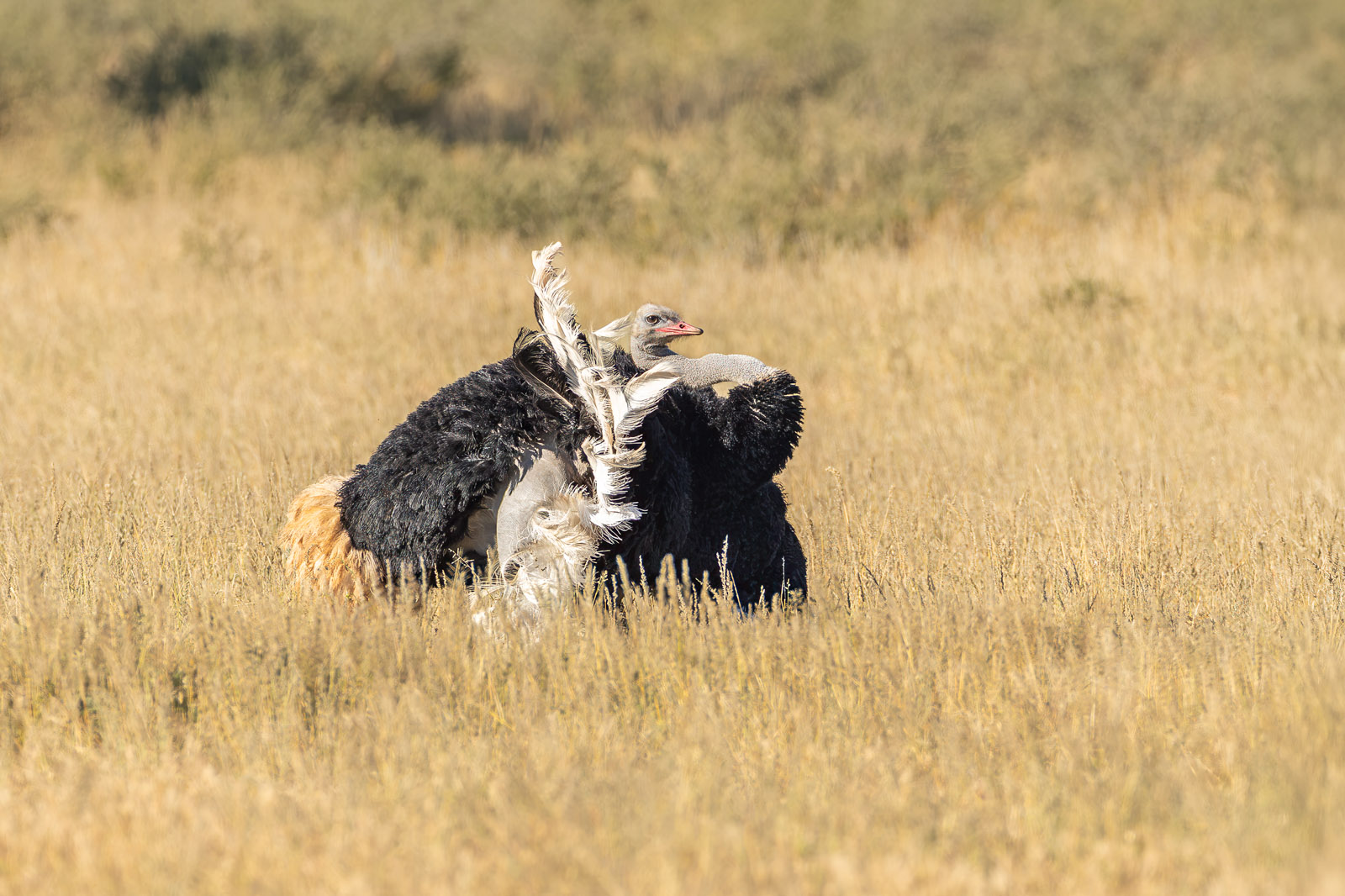
Another take of the male with his neck in an S-curve and his wings swinging.
The Corkscrew
Mid-display, the neck movement tightens into a rapid side-to-side twist – the so-called corkscrew – as the male rotates his head and neck against his flared wings. It is one of the hardest moments to capture cleanly, as the neck is a blur of motion.
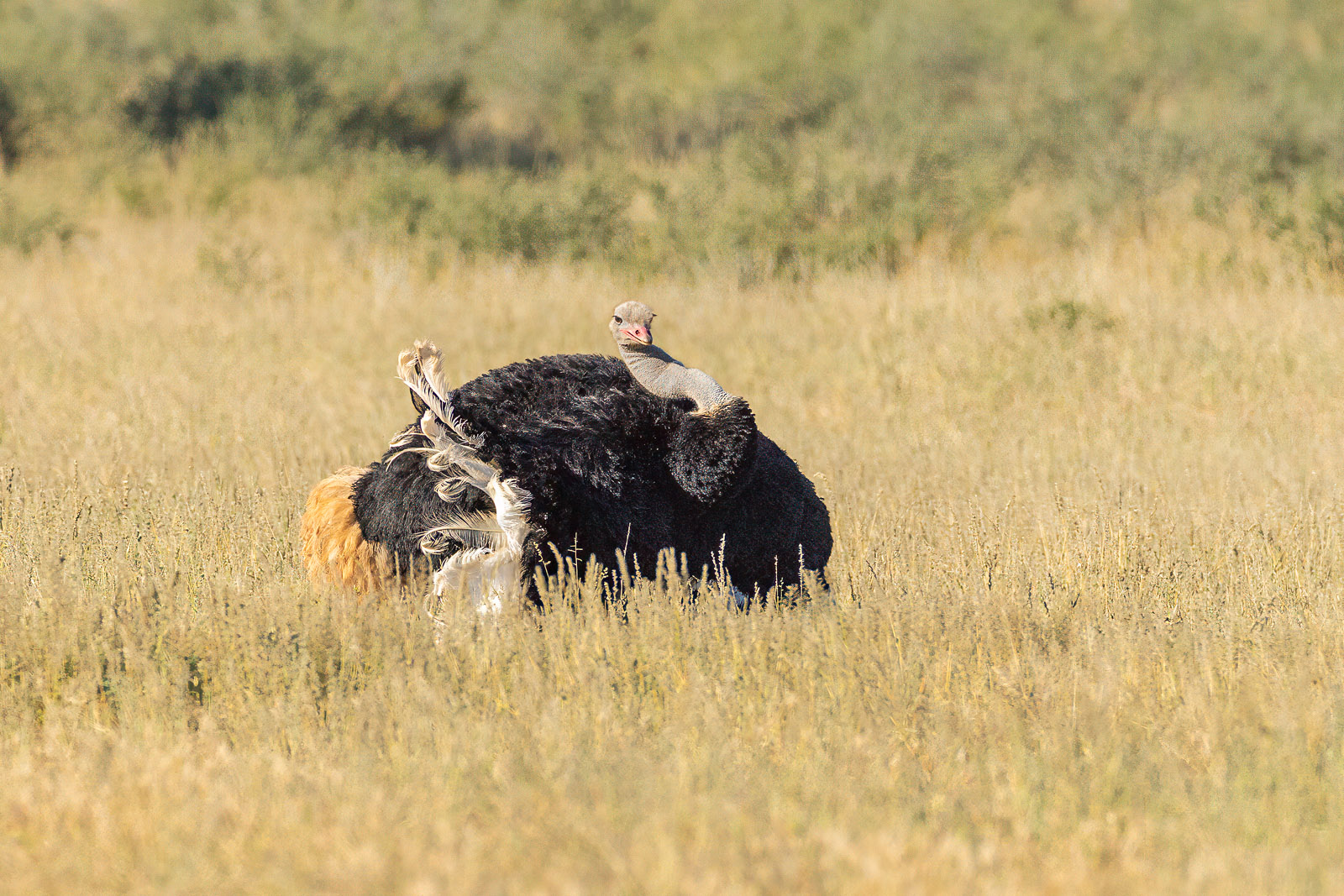
The corkscrew; head and neck whip from side to side across the fanned wings.
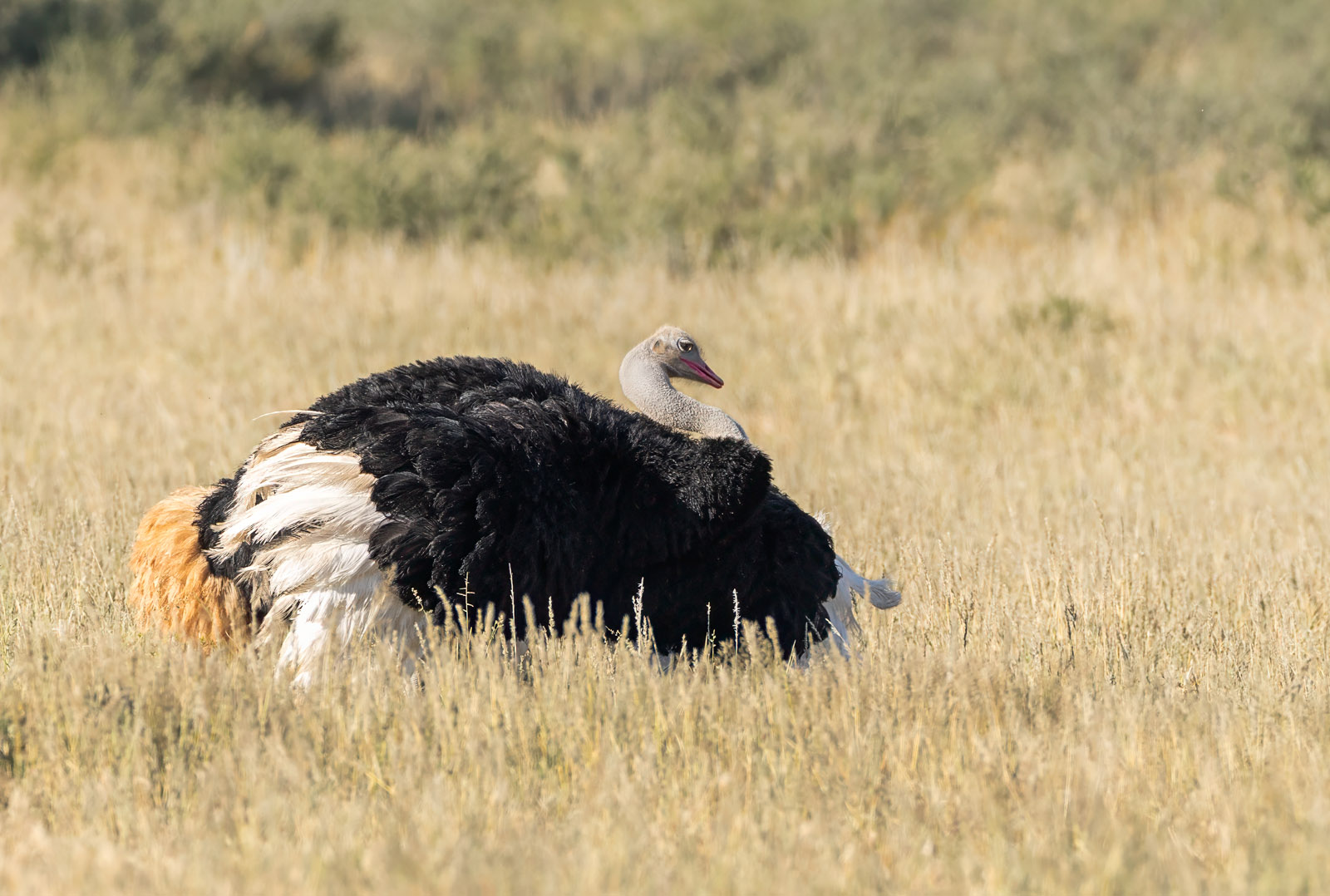
Another capture of the same side to side motion. Can also see the inflated neck.
Acceptance
Whilst the male had been kantling, the female was prancing about with her wings hanging low and open. She then turned around with her back facing the male.
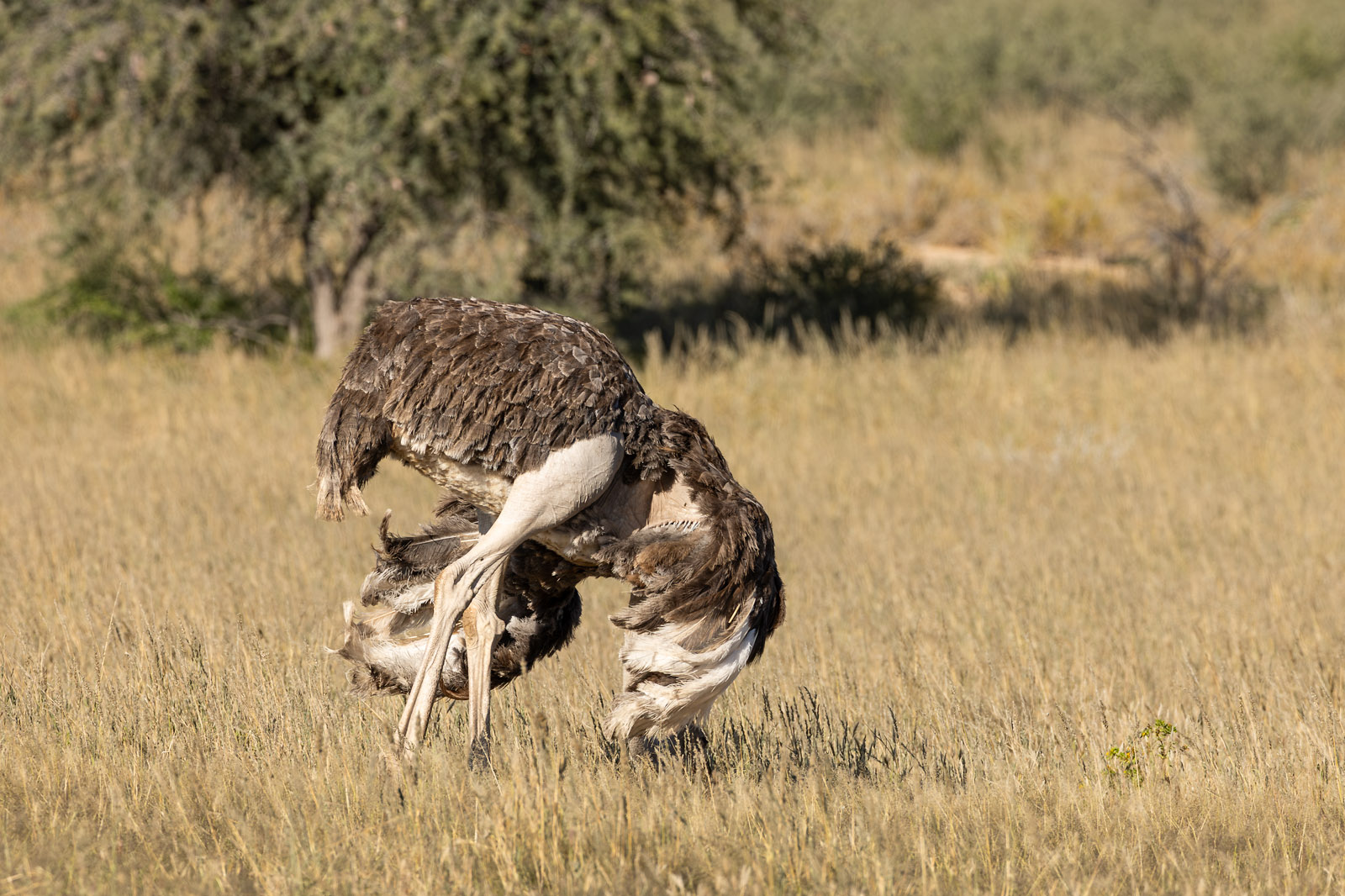
The female crouches low, wings still loosely spread with her back now facing the male.
A Pause in the Grass
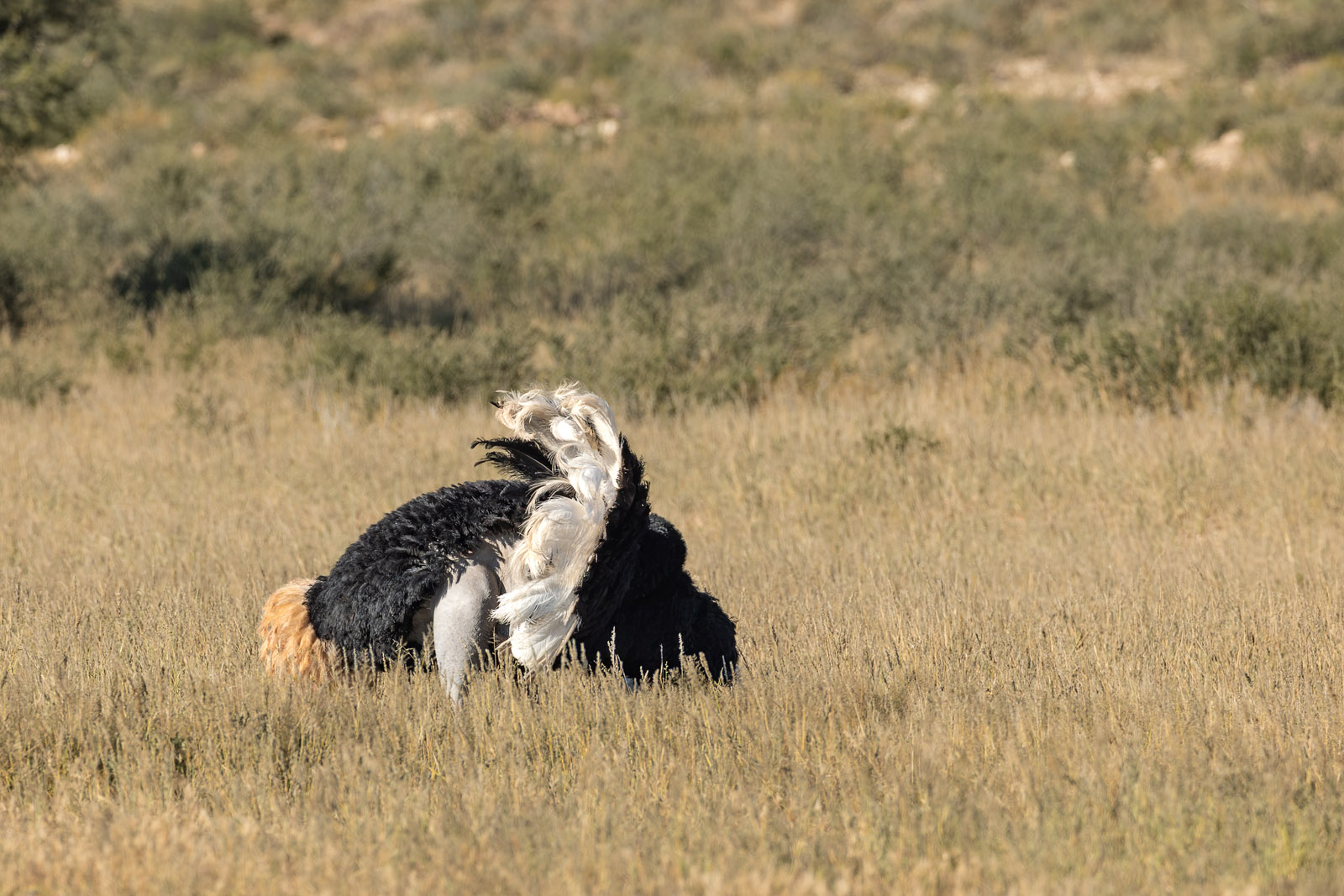
The male is now crouched low in the grass, with his wings still outstretched.
The Run
The male breaks from his crouch and rises, closing the distance to the female at pace (they were about 40 metres apart) – neck extended, long strides and tail plumes bouncing behind him.
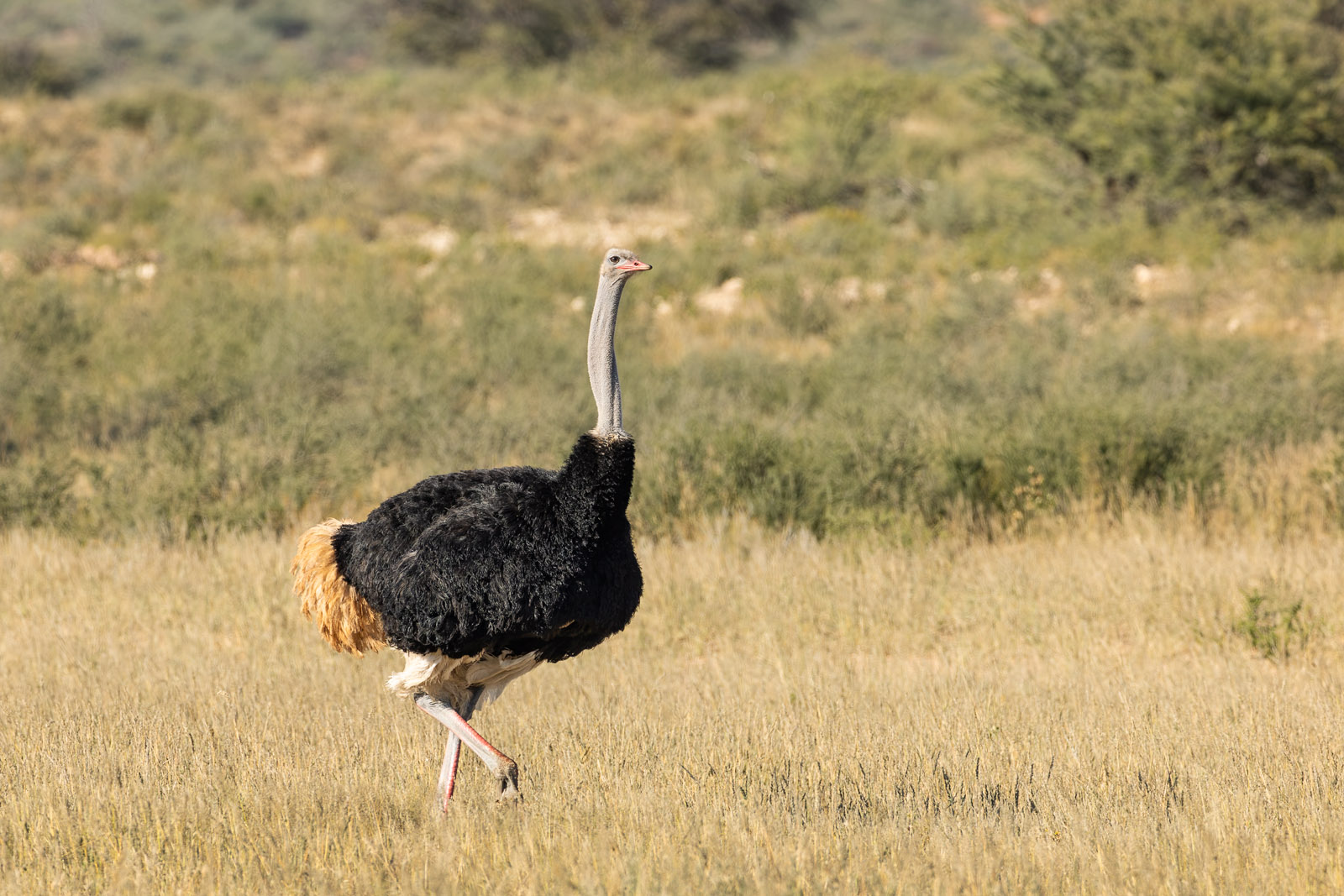
He starts running towards the female
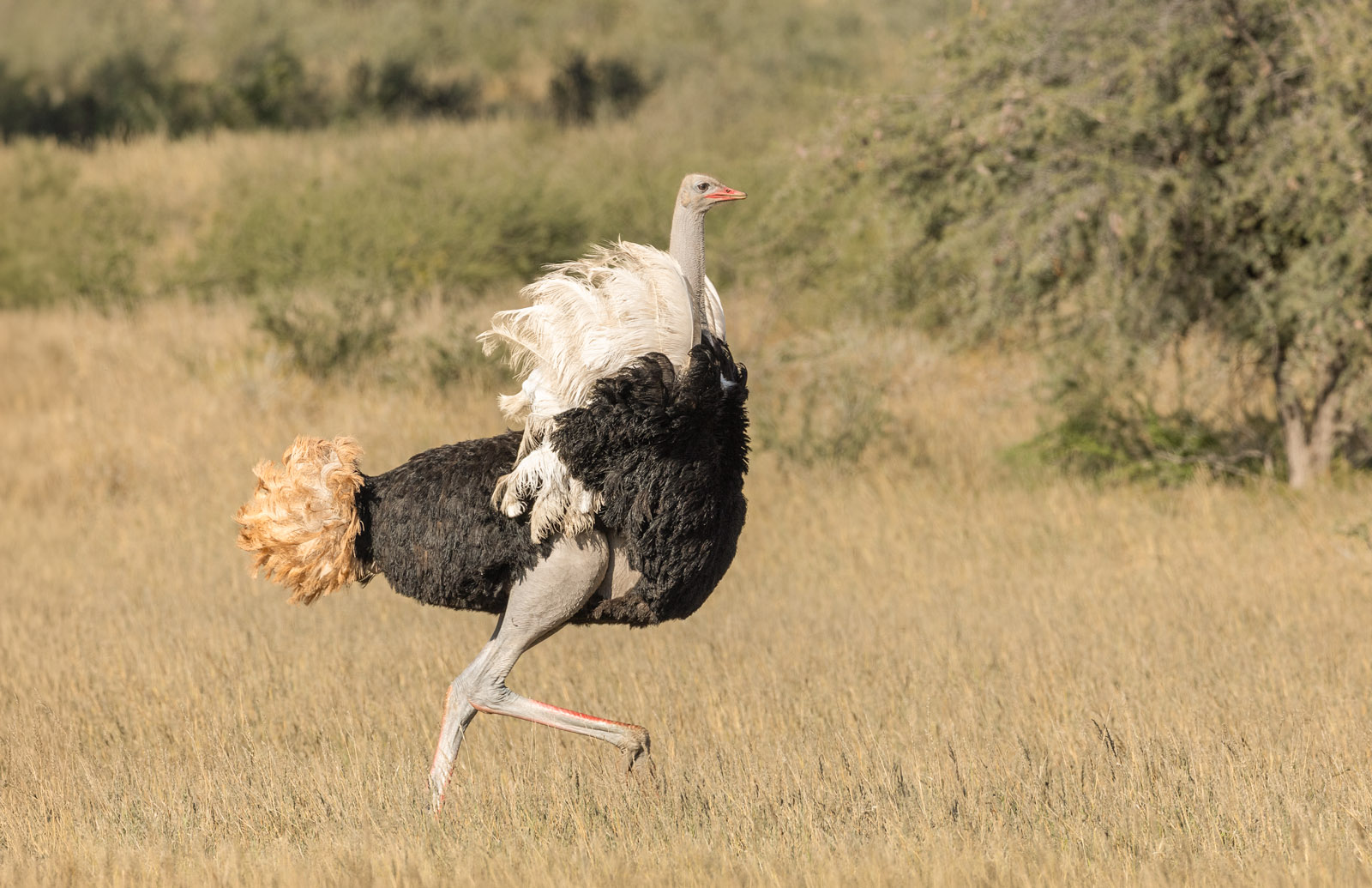
As he gets nearer to the female he again flares his wings whilst running at full tilt
Final Positioning
Reaching her, the male carefully positions himself behind the crouching and submissive female.
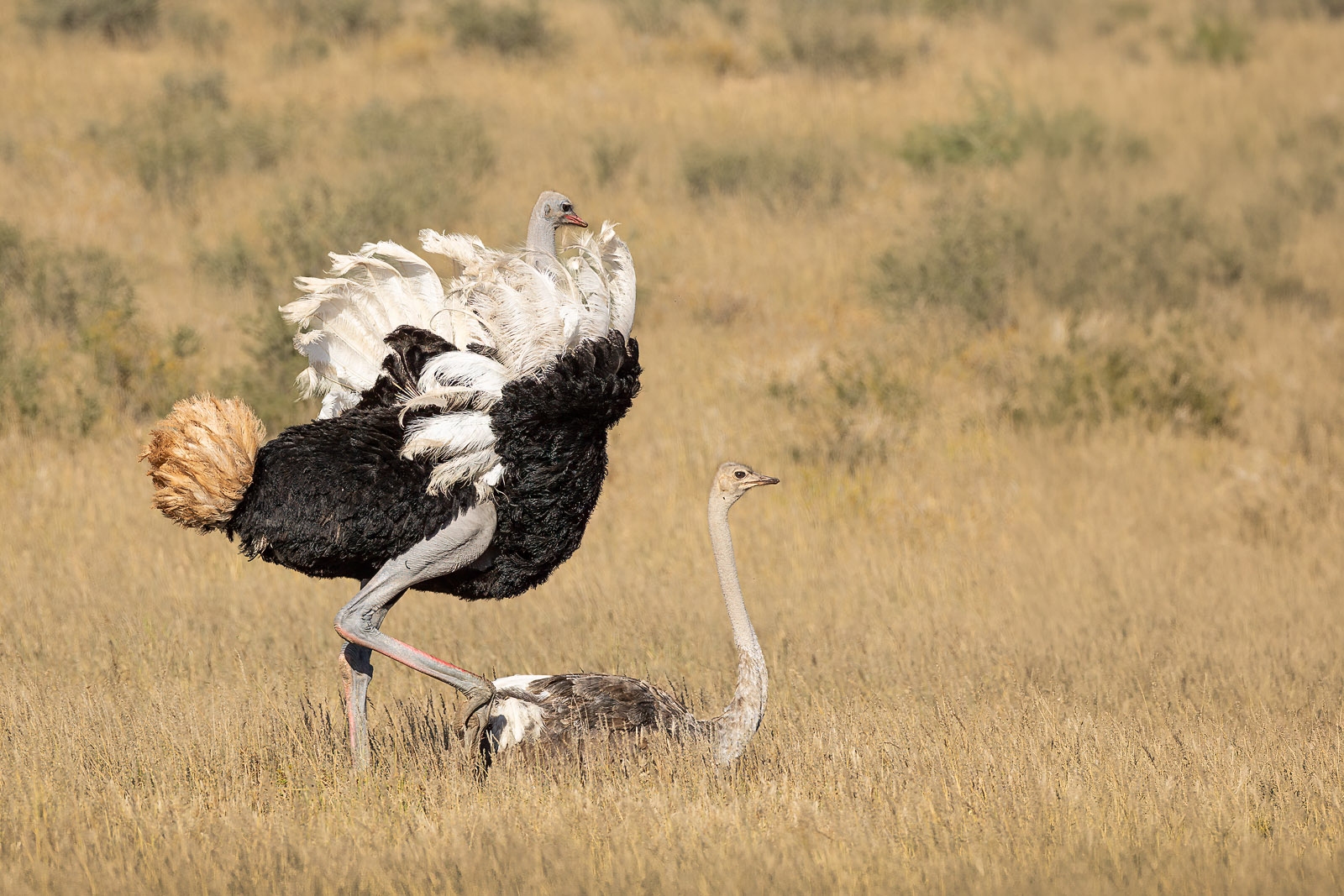
The female is flat on the ground with her head held high with the male still displaying his white edged wings.
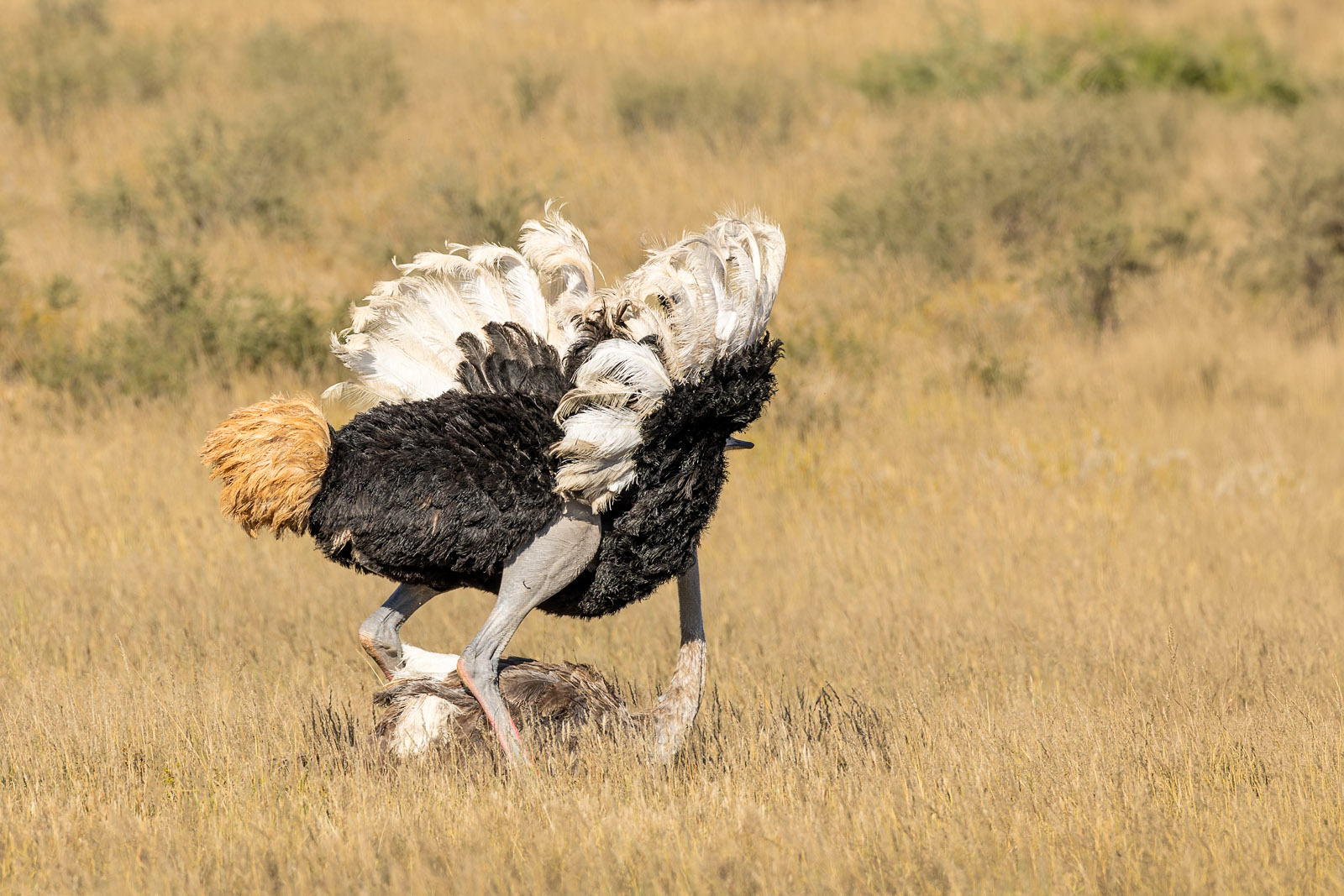
The moment of mounting, contrasting the massive bulk of the male against her smaller submissive posture.
The Climax and Conclusion
Whilst mounted, the male continues with kantling and corkscrewing. The inflation of his neck is now more noticeable – the so-called booming.
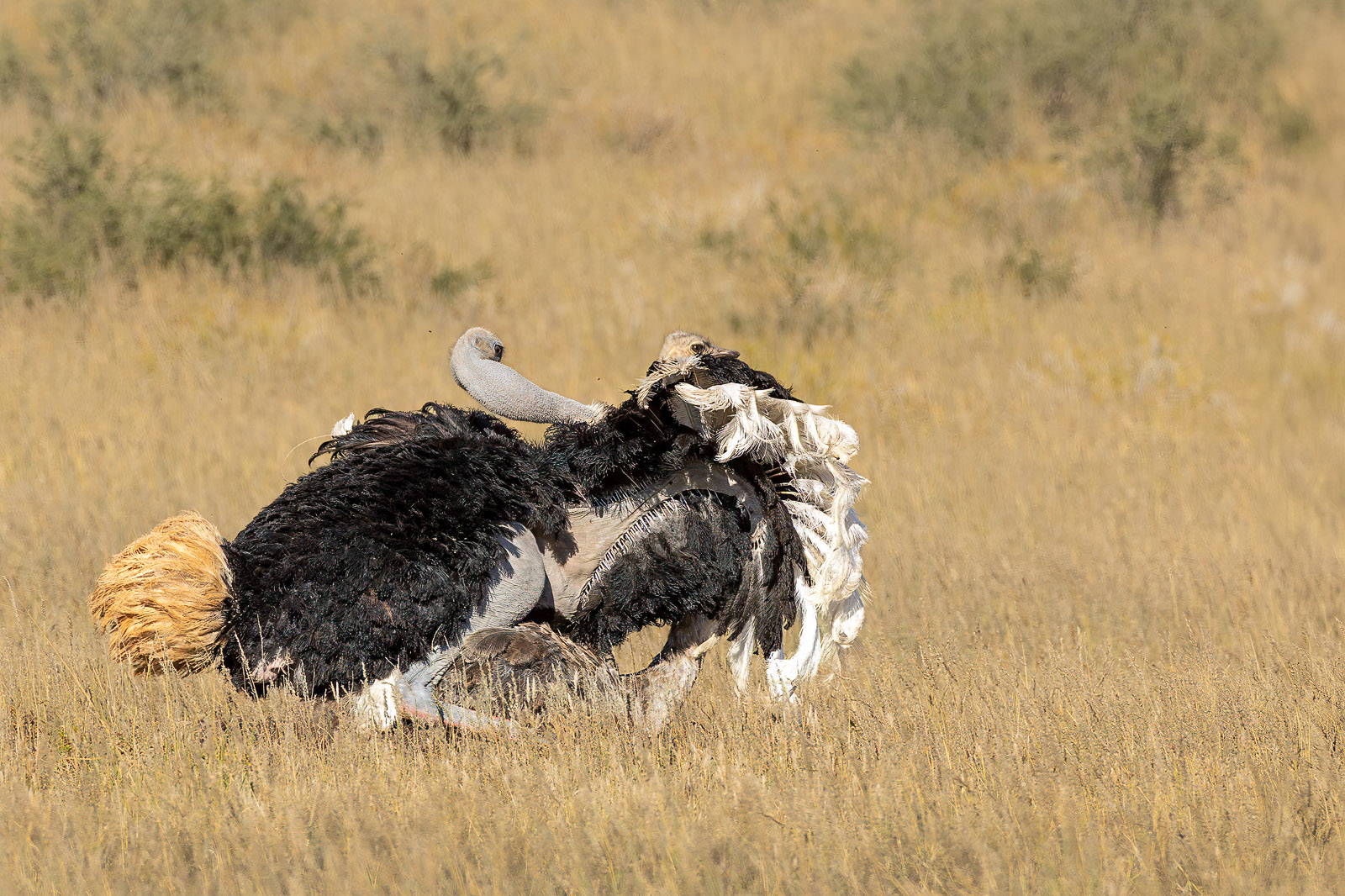
The copulation with the male kantling and booming whilst the female remains passive with her neck erect.
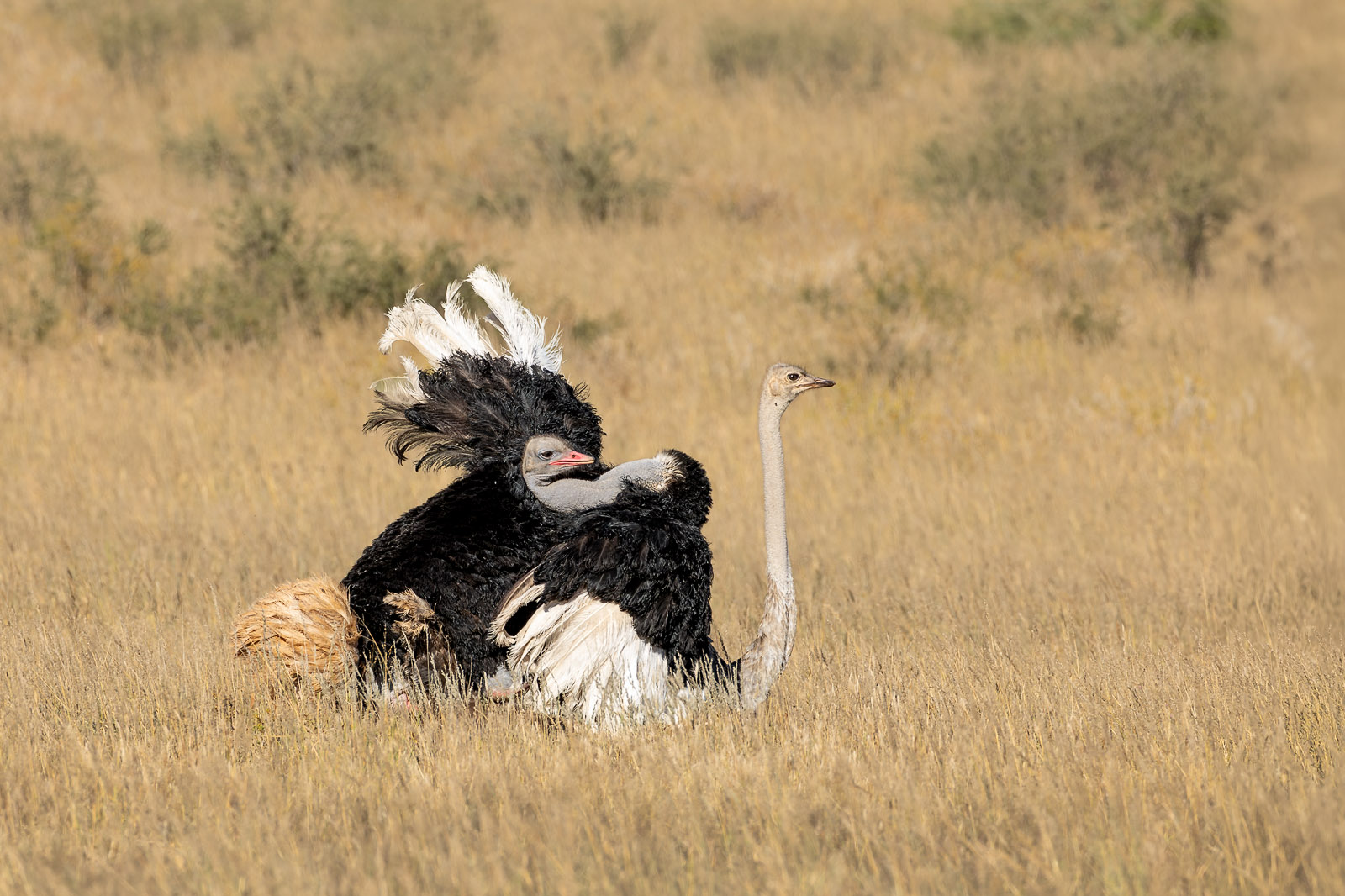
Mid-mating intensity, with the male corkscrewing his neck – female remains passive and still.
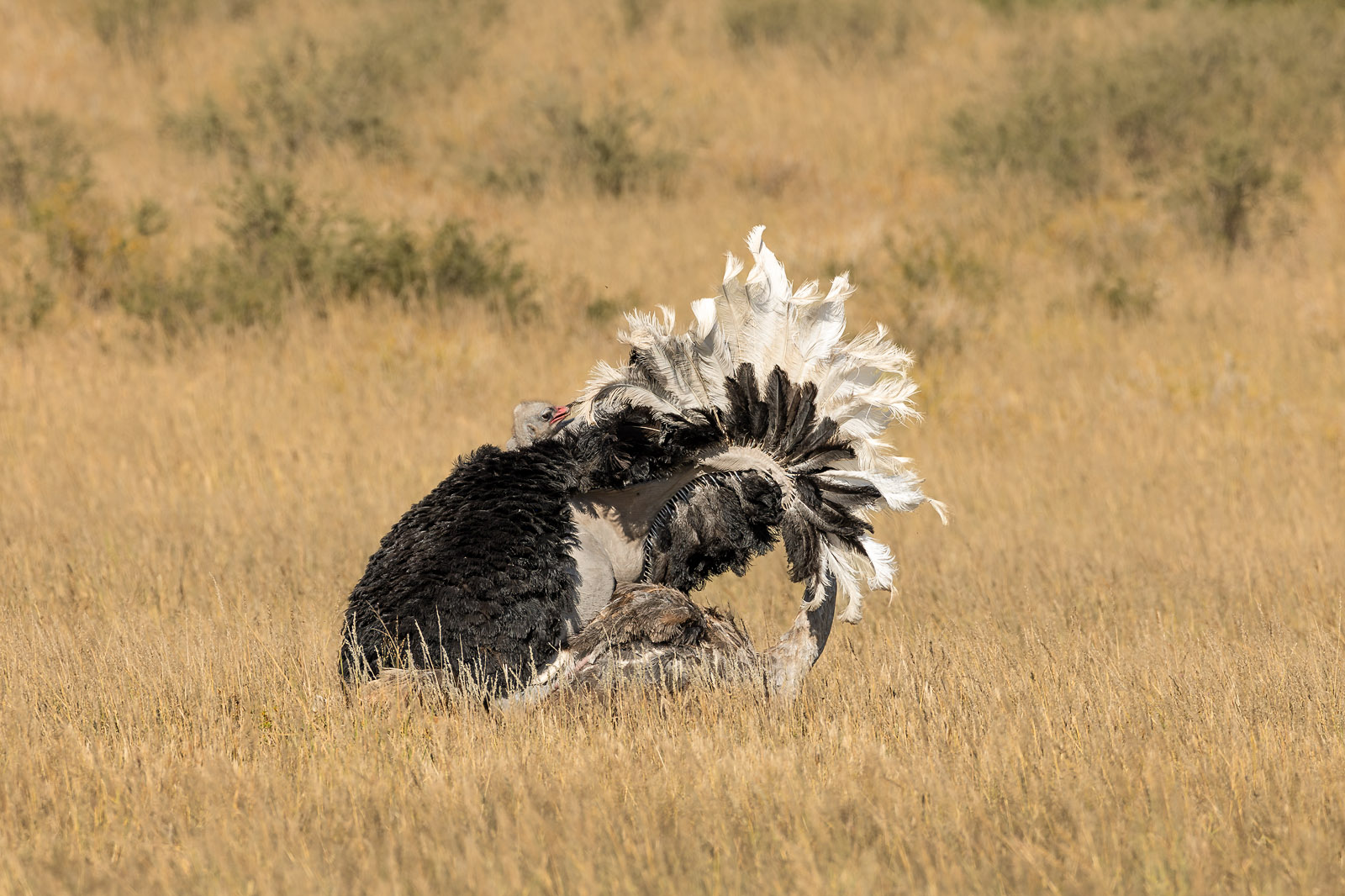
The climax of the copulation with the males wings fully extended whilst in a “wing wave”.
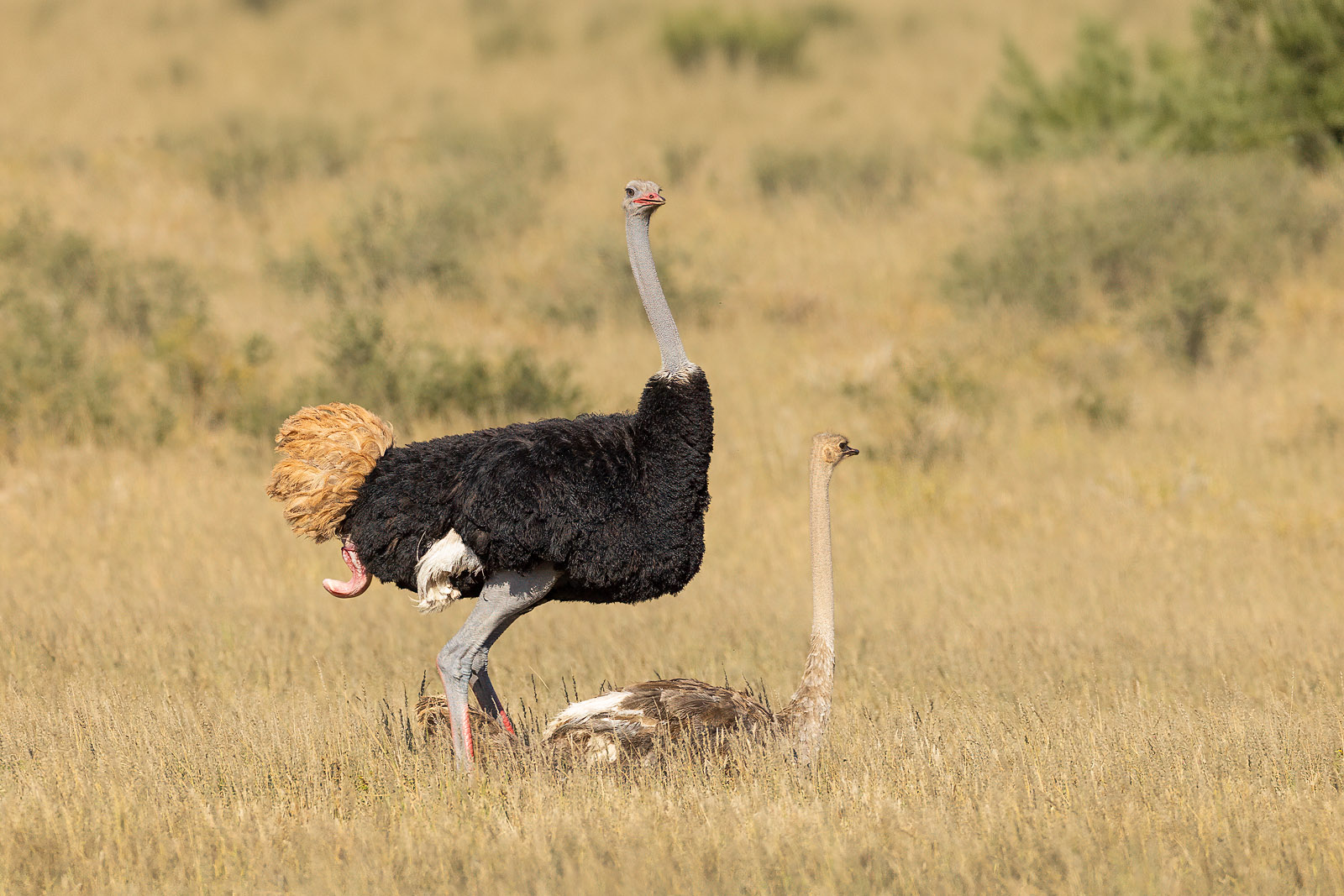
The male dismounts standing upright over the female. His beak and the front of his legs are bright red. He also displays his phallus.
See note at the end of the post below.
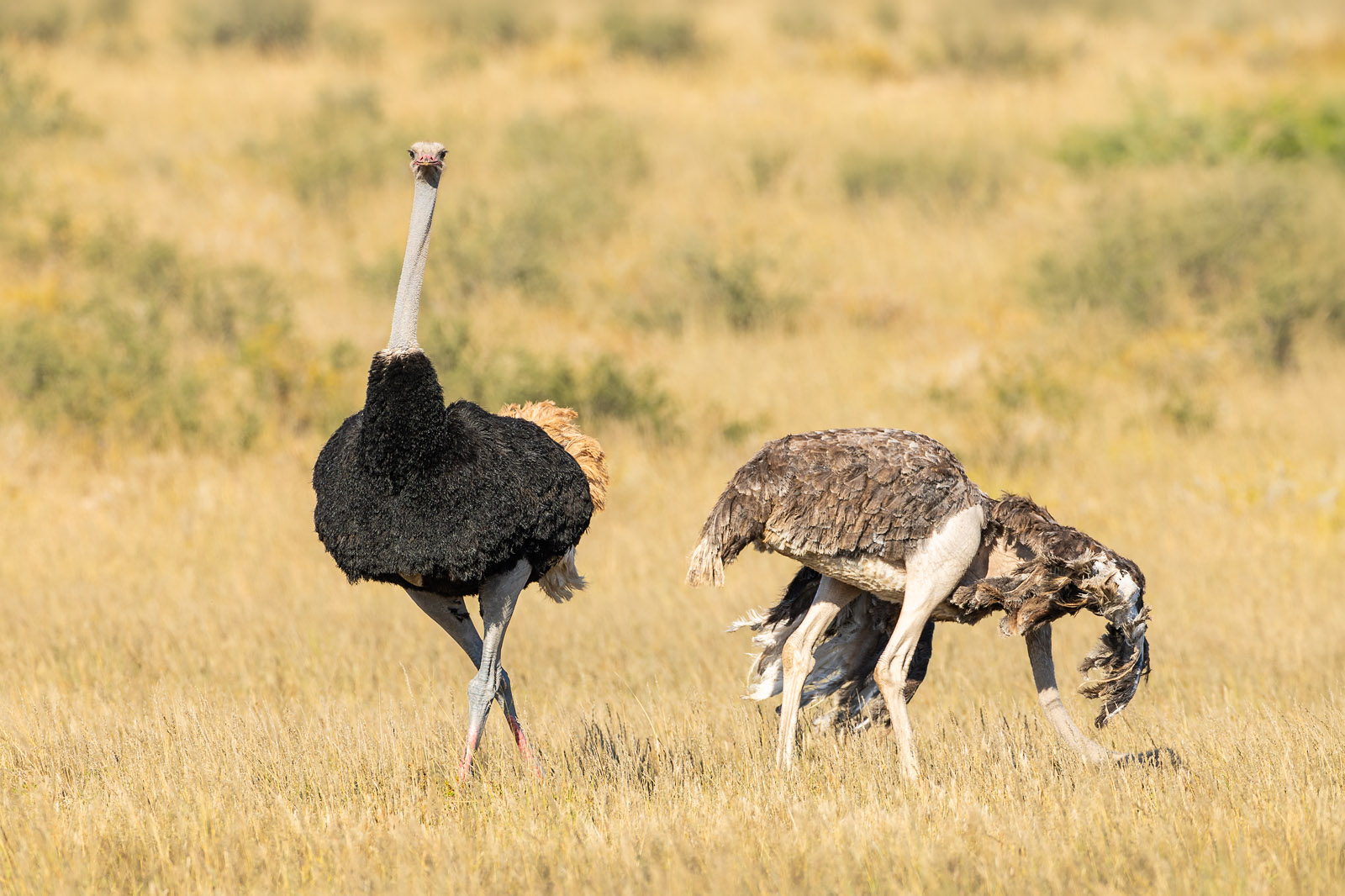
The female stands up, shaking her wings whilst maintaining a low head position. The male starts to turn around.
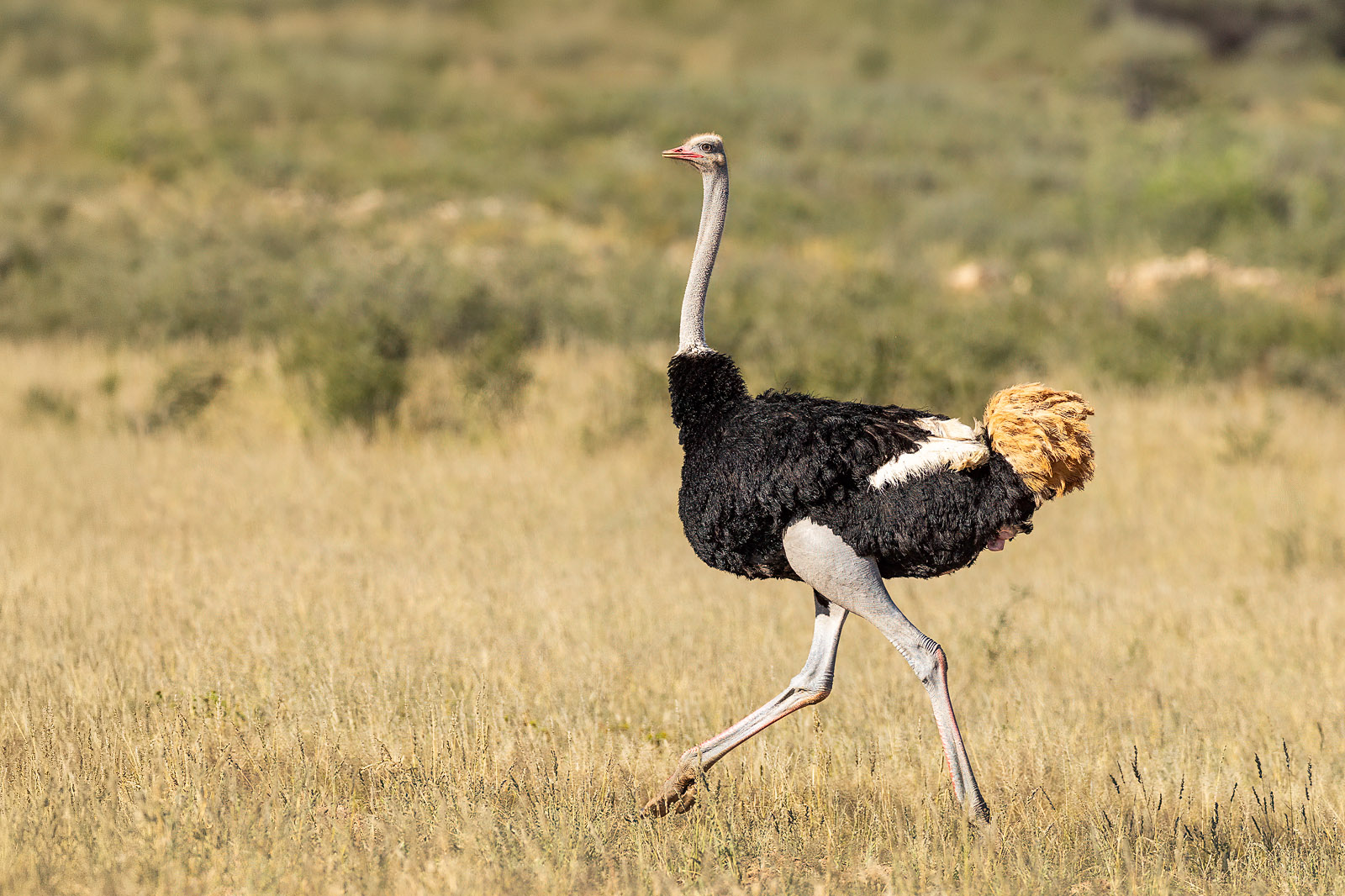
The male strode away in the direction from where he came. The female moved off and lay in the sand in the shade of a thorn tree.
Nature rarely gives us a front-row seat to its most intimate moments. Capturing this entire sequence required knowledge of bird behaviour, anticipation, excellent camera set-up, a fast-shooting camera with a long lens and a lot of luck. The swift transition from a quiet walk to a chaotic, theatrical dance reminds us just how complex and beautiful avian behaviour can be.
What do you think?
Which frame in the series surprised you the most? Have you ever experienced a courtship display like this in the wild?
Drop your thoughts in the comments below! If you enjoyed the post, please share it with a fellow nature lover or birder.
Photography Notes
With the exception of the first image above, all images were captured using a Canon EOS R1 camera with an attached Canon RF 400mm f/2.8L IS USM lens with a Canon RF 1.4x extender. The first image was captured using a Canon EOS R3 camera body with an attached Canon RF 70-200mm f/2.8L IS USM Z lens.
The exposures were set manually. They were taken at an aperture of either f/5.6 or f/8 and at an ISO of either 800 or 1600. The shutter speed varied between 1/2000 sec and 1/4000 sec. The rig was supported on a Blubb® beanbag. Exposures were challenging with the black and white contrast of the male ostrich.
The camera is set up using the custom functions C1, C2 and C3. Each custom function is set for a particular type of photography. In this case, I used the C3 function which is set for action photography. This function includes a shooting frame rate of 40 fps using back button focus with the AF-ON button (full-press) set to tracking and full frame autofocus area. I never encountered a buffer issue.
The entire sequence consisted of 852 images which was captured over a period of 6 minutes, 47 seconds. I did take a few momentary video captures. Will also now attempt to construct video from the still shots. At 40 fps it should be more than adequate to playback satisfactorily.
Note on Ostrich’s sexual organs.
Only about 3% of bird species, of which the Ostrich is one, retain an external, intromittent copulatory organ — the rest reproduce via a “cloacal kiss.”