
We recently returned from a trip to the Kalahari, taking in the Augrabies National Park (link to blog) before heading once again into the Kgalagadi Transfrontier Park.
It was a difficult journey there this time. Extreme weather in the Western Cape Province had badly damaged roads and other infrastructure, forcing a lengthy detour around the closure of Meiringspoort, and as we drove through heavy rain for most most of the first leg. Nevertheless, it was worth the effort.
The Kgalagadi had been transformed by good rains that lasted well into May. Grass stood high and dense in the river beds, drawing large herds of game, especially Springbok and Gemsbok and bird life was prolific – especially the smaller raptors: kites, falcons and goshawks.
This post is about one particular sighting: a juvenile Pale Chanting Goshawk that seemed to take on more than it could handle
On our first full day, still finding my rhythm with action photography, we stopped to observe a Pale Chanting Goshawk perched in a tangle of twigs atop a large bush – not an ideal photograph , but the start of the story.
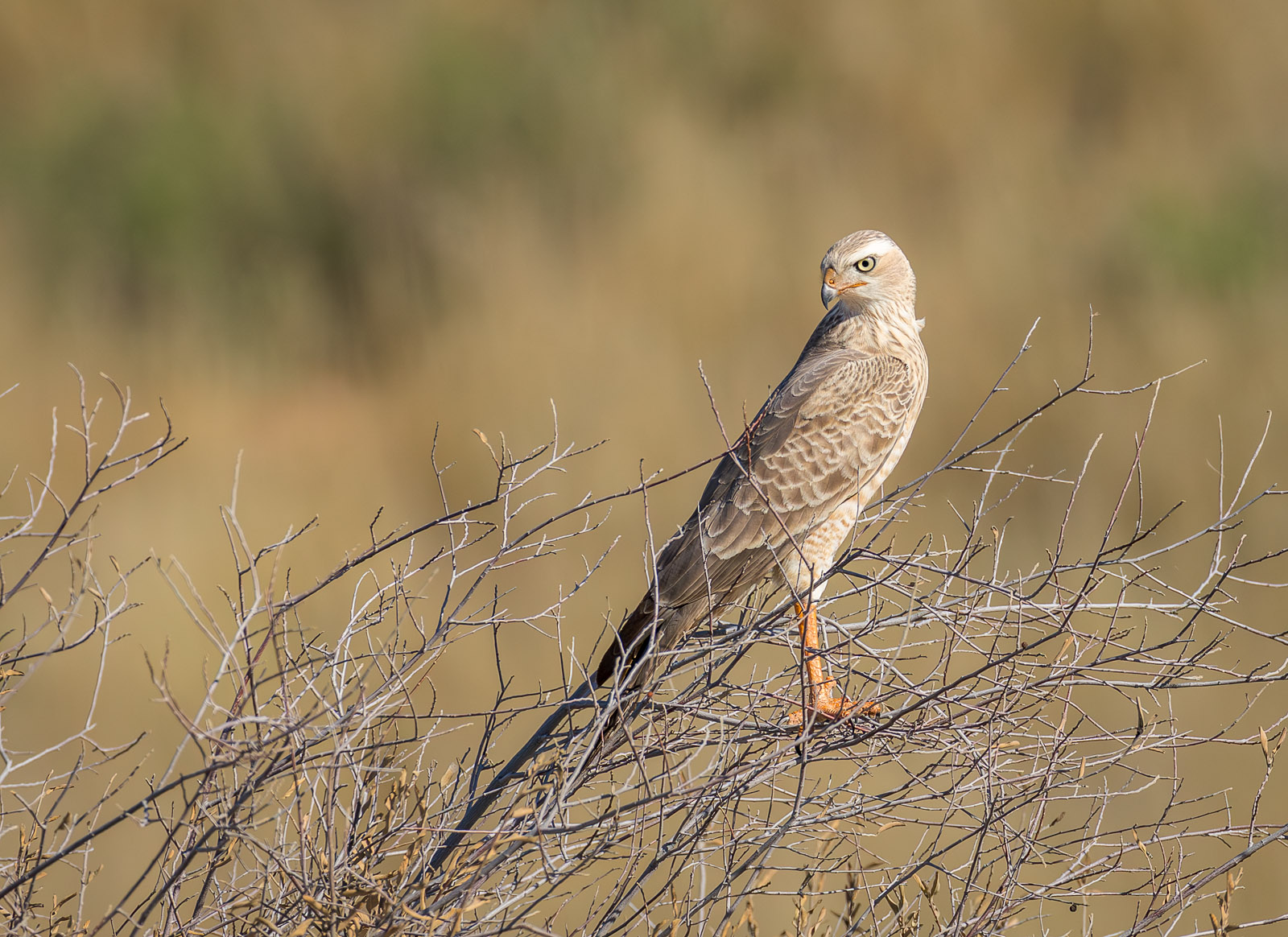
time – 10:30:59.440
Sometimes it pays to just wait and see if something develops and I hoped for a “take-off” shot which would also serve as some of my practice. Sure enough it obliged
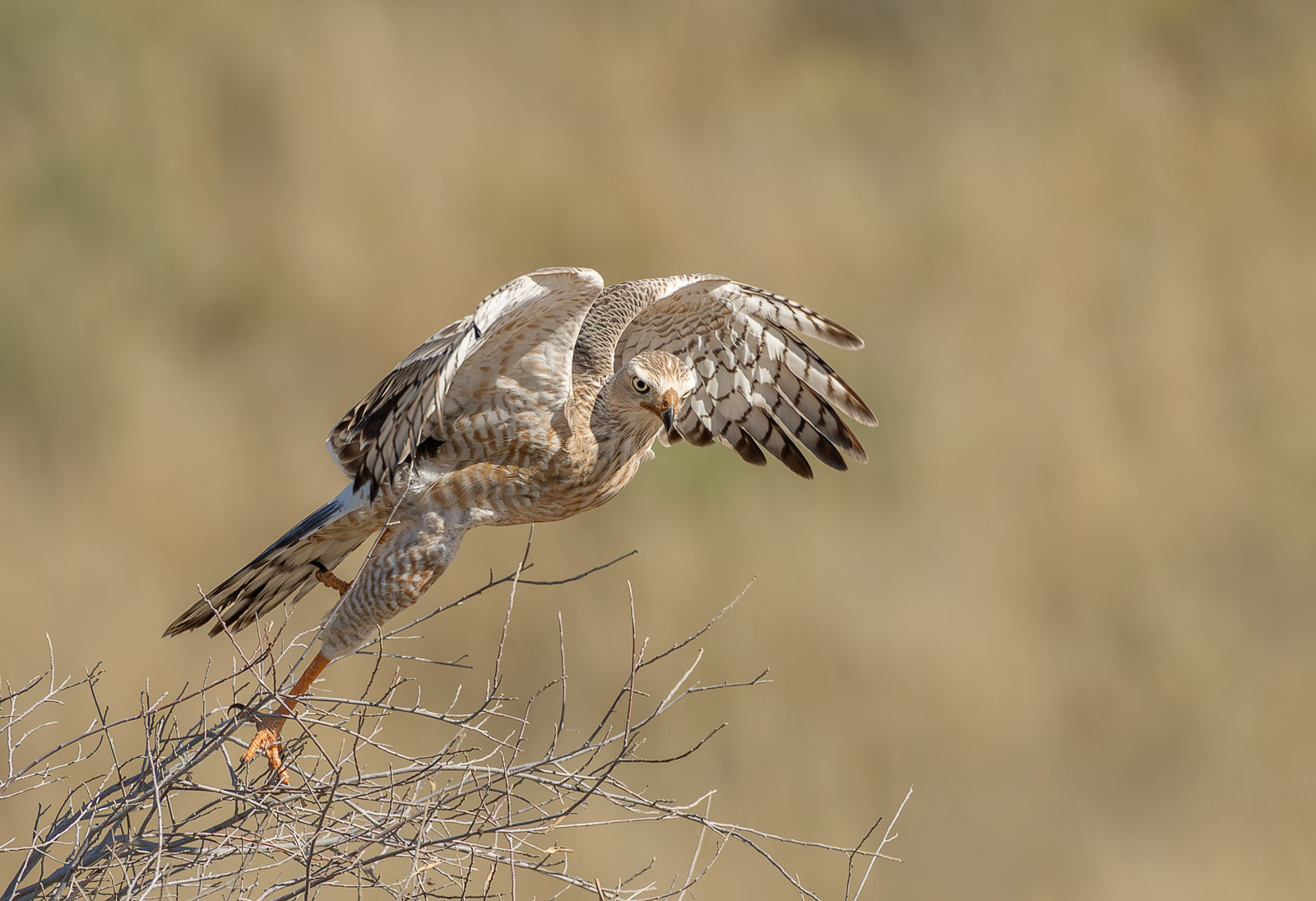
It circled for a few good passes – the light wasn’t perfectly behind me and the sun was already quite high in the sky, but still good enough for clean images.
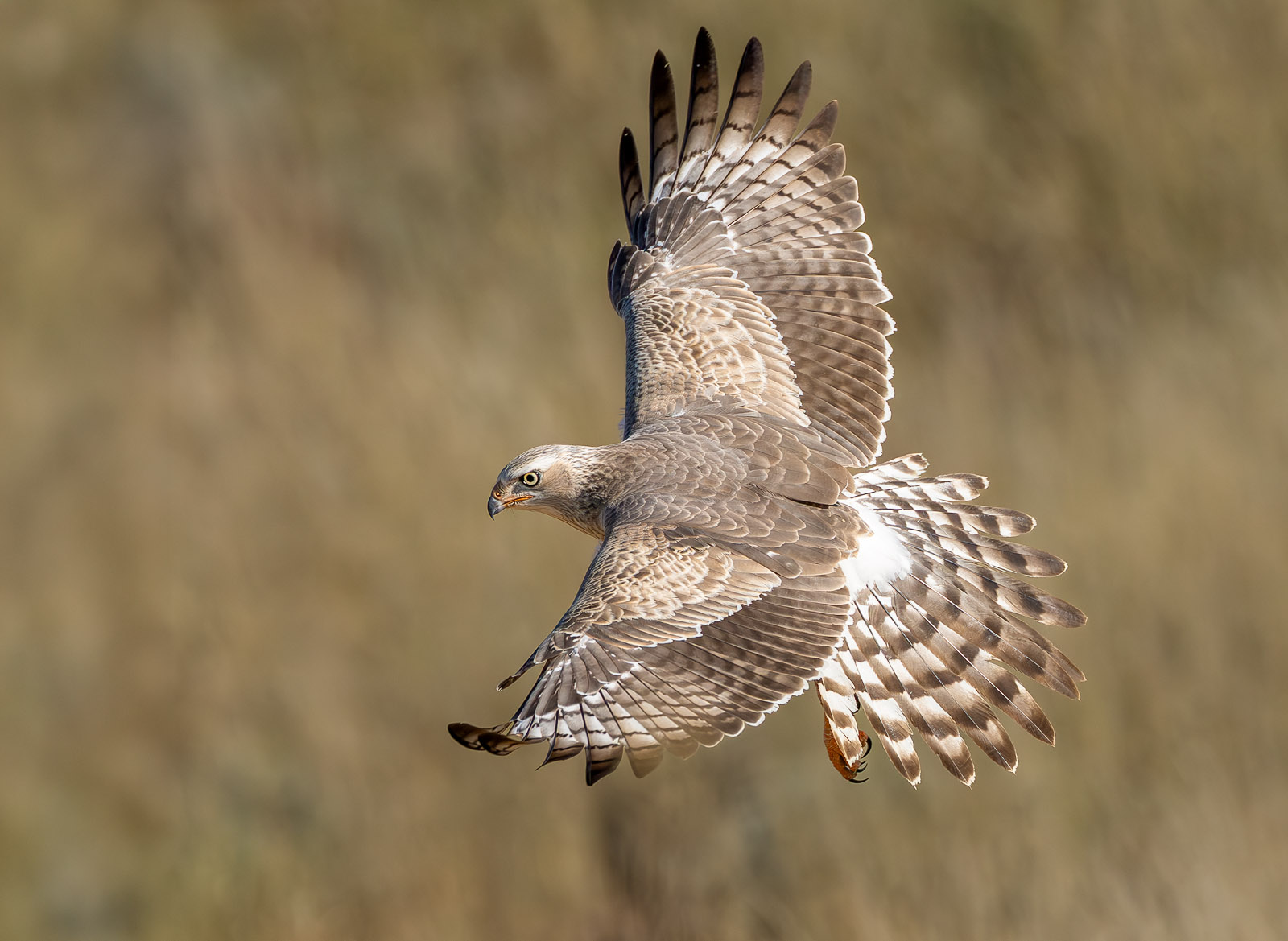
time – 10:32:42.040
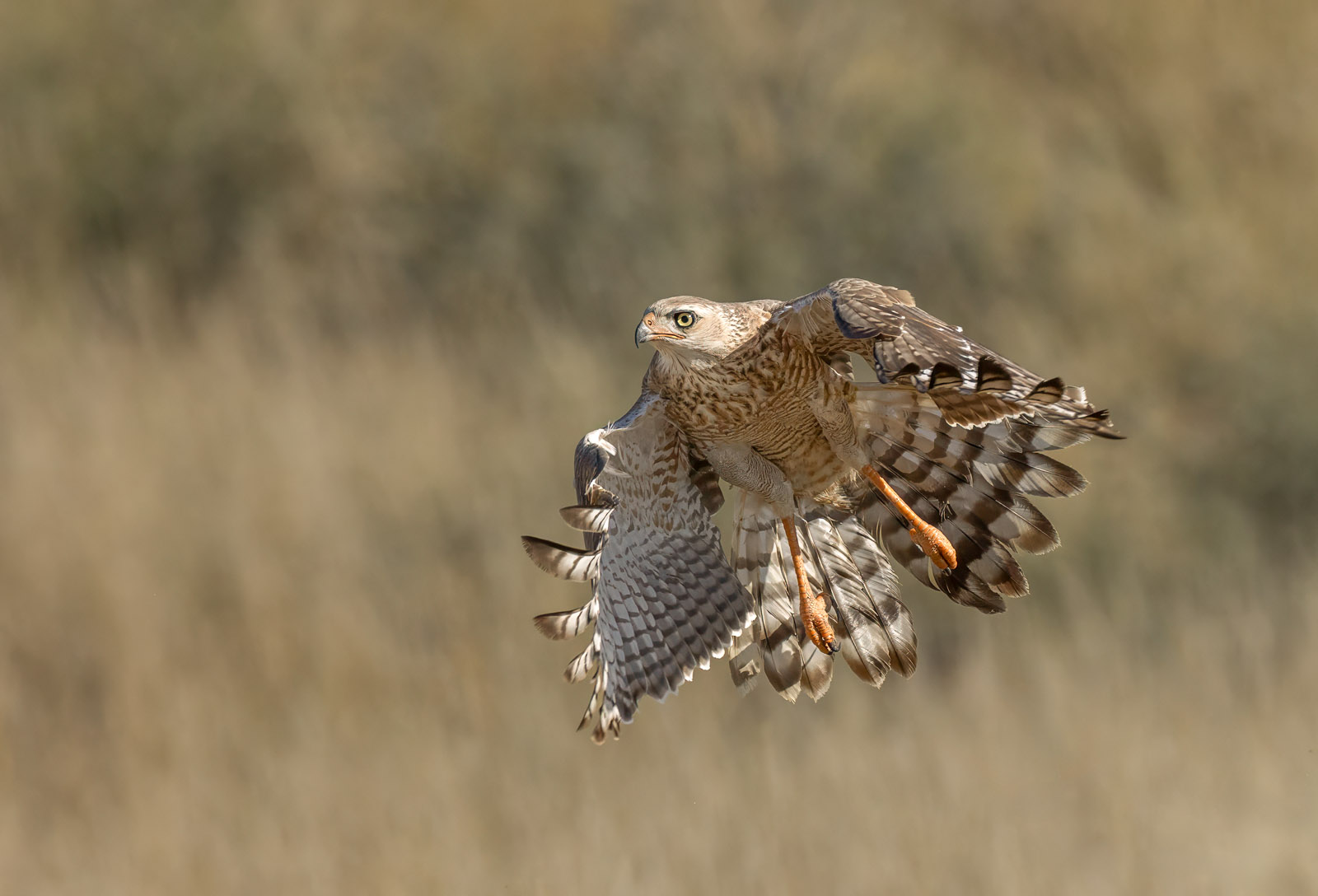
time – 10:32:45.270
Then it came in to land in the same bush.
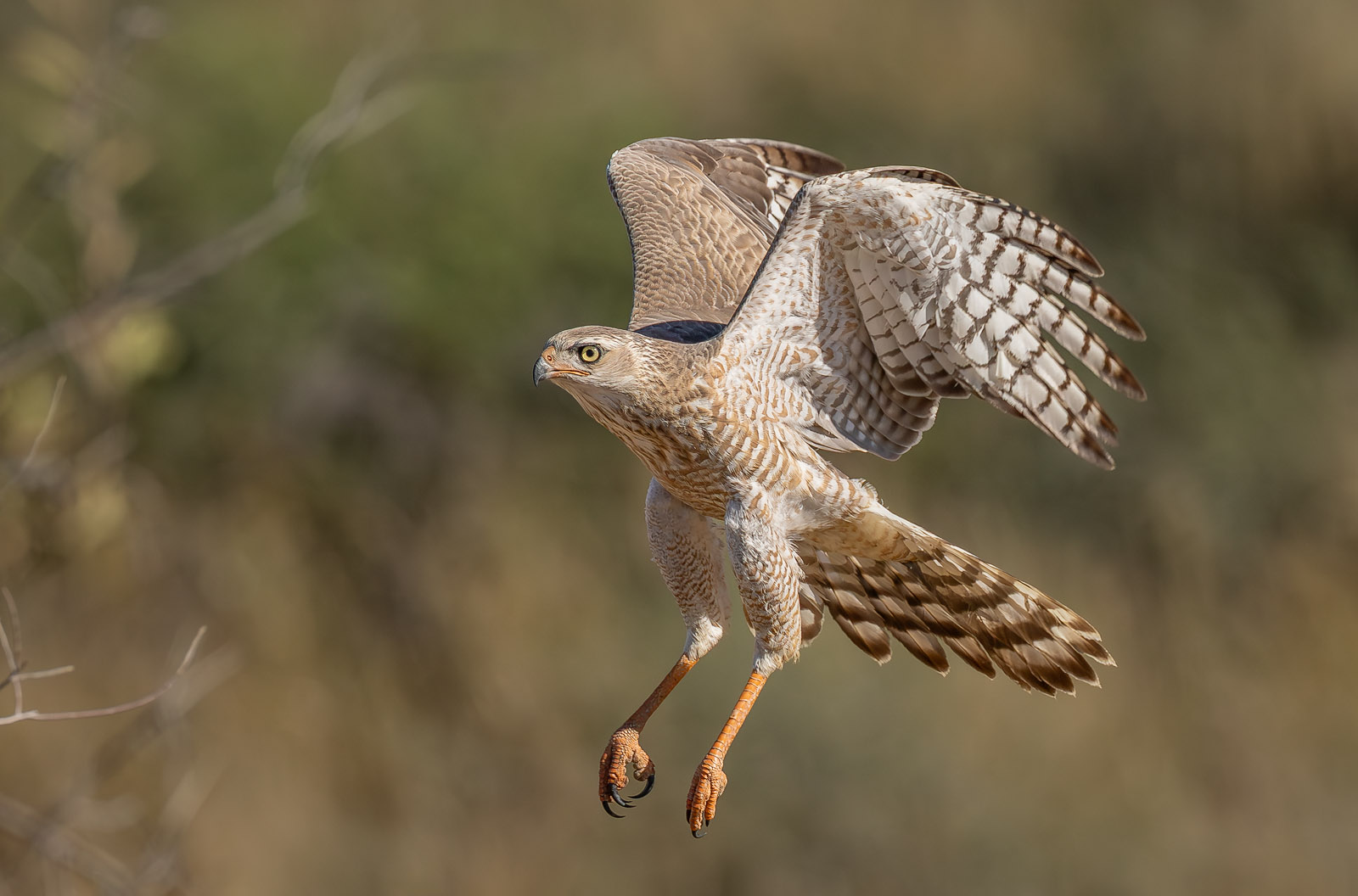
time – 10:32:46.320
That felt like a solid fly-around with some very acceptable images banked. The goshawk perched for a few minutes, and I assumed the action was over. But I decided to wait a little longer, on the chance it would take off again. It did – except, this time, instead of circling, it dropped straight to the ground.
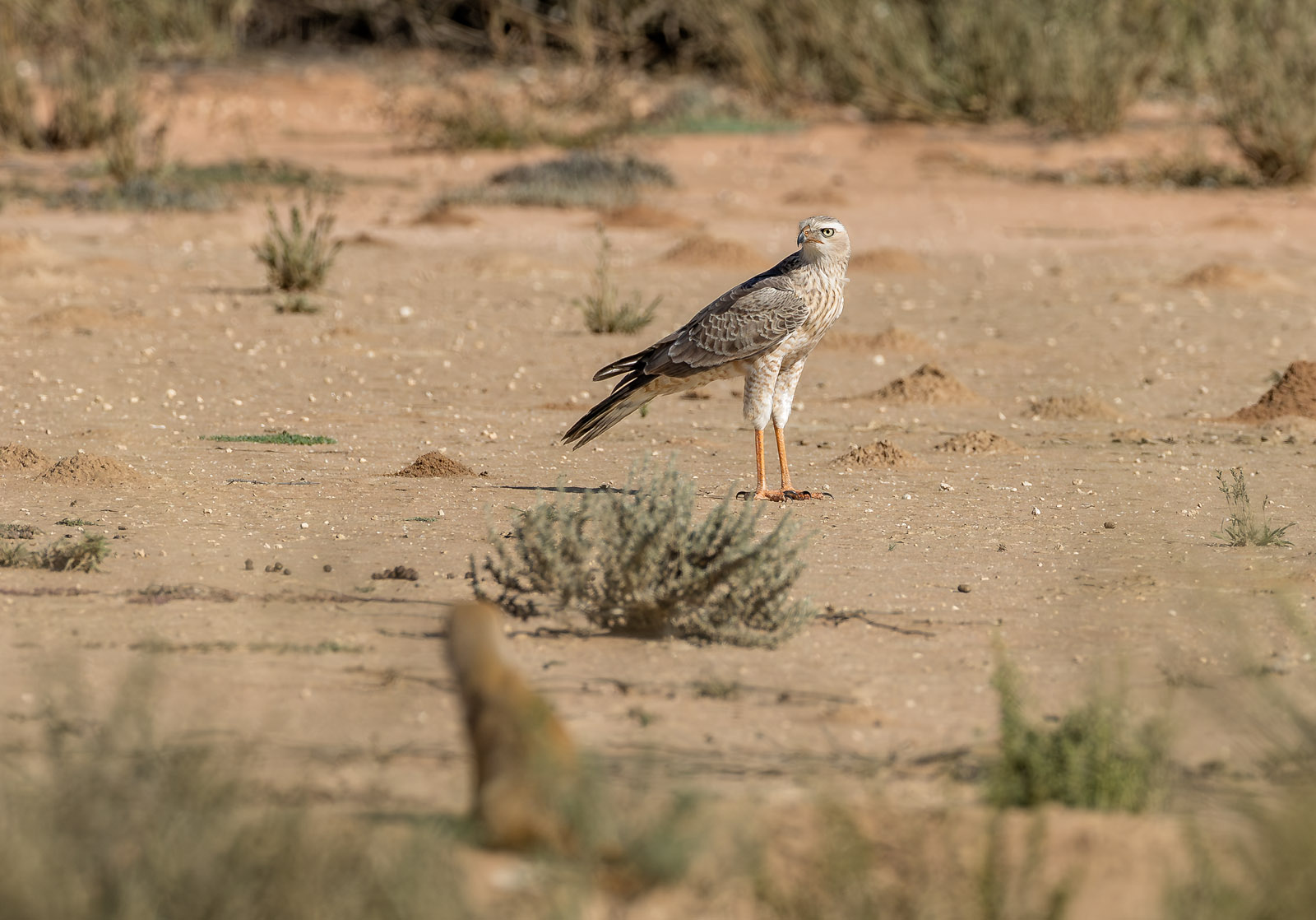
time – 10:36:27.560
Only then did I notice a Yellow Mongoose in the foreground. The goshawk looked around, then fixed its attention on the mongoose – which, I‘m fairly sure, had been watching it the whole time. The mongoose, however, seemed distracted, or perhaps already thinking about heading back to its burrow; it certainly wasn’t looking at the goshawk when the bird suddenly launched itself into the air.
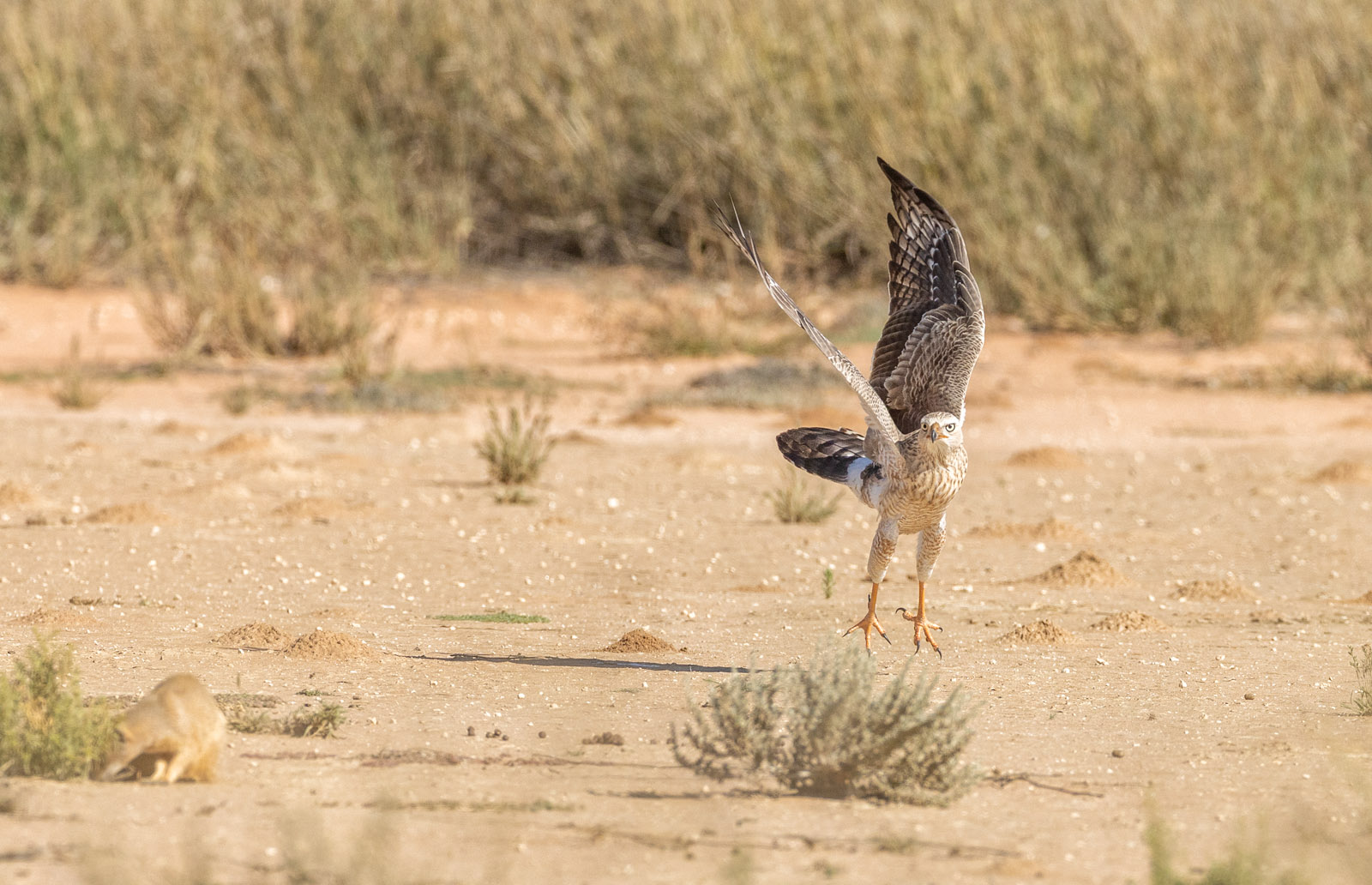
time – 10:37:32.510
The goshawk was now clearly committed, closing fast on the mongoose that still appeared to be looking the other way.
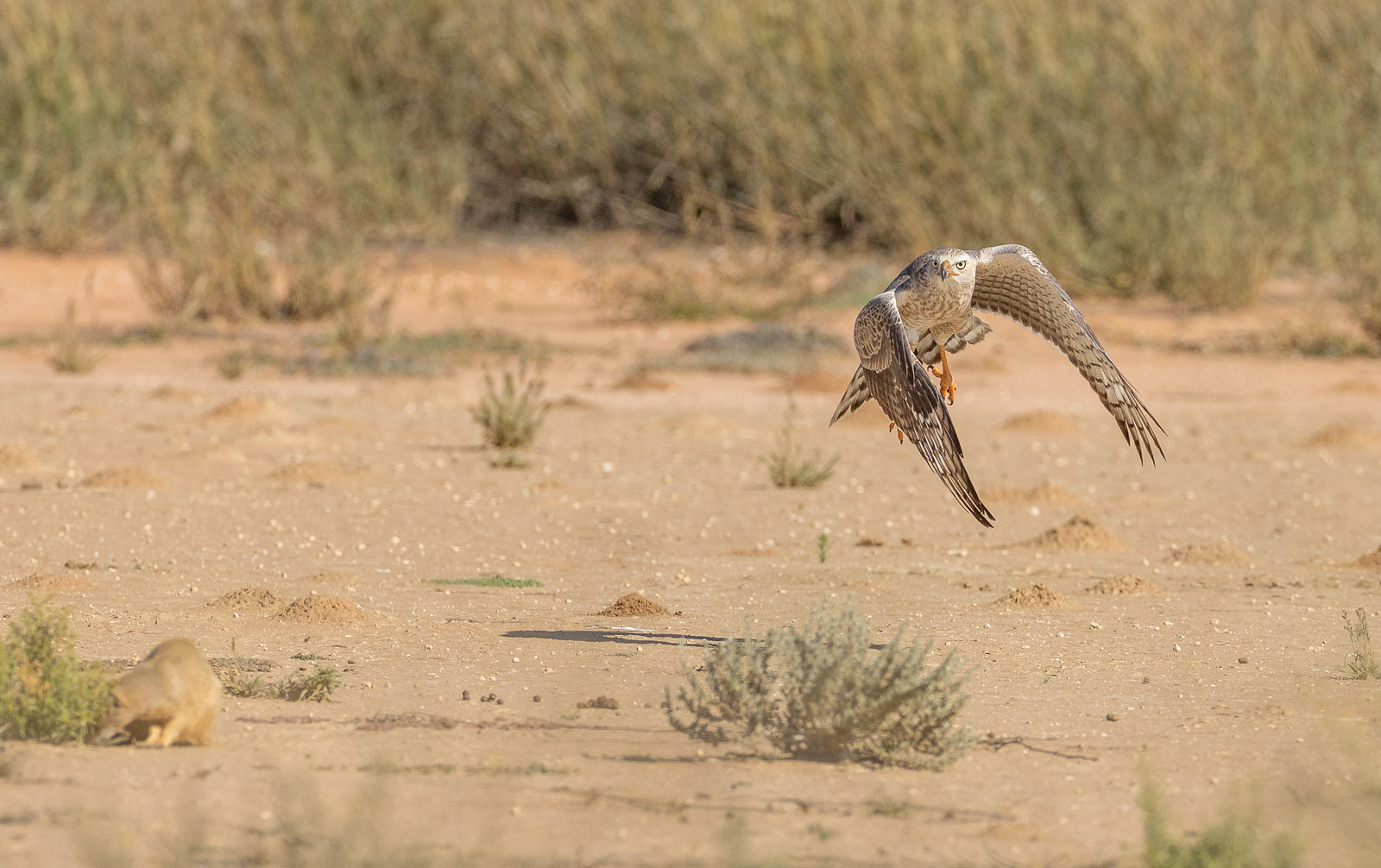
time – 10:37:32.640 130 milliseconds later
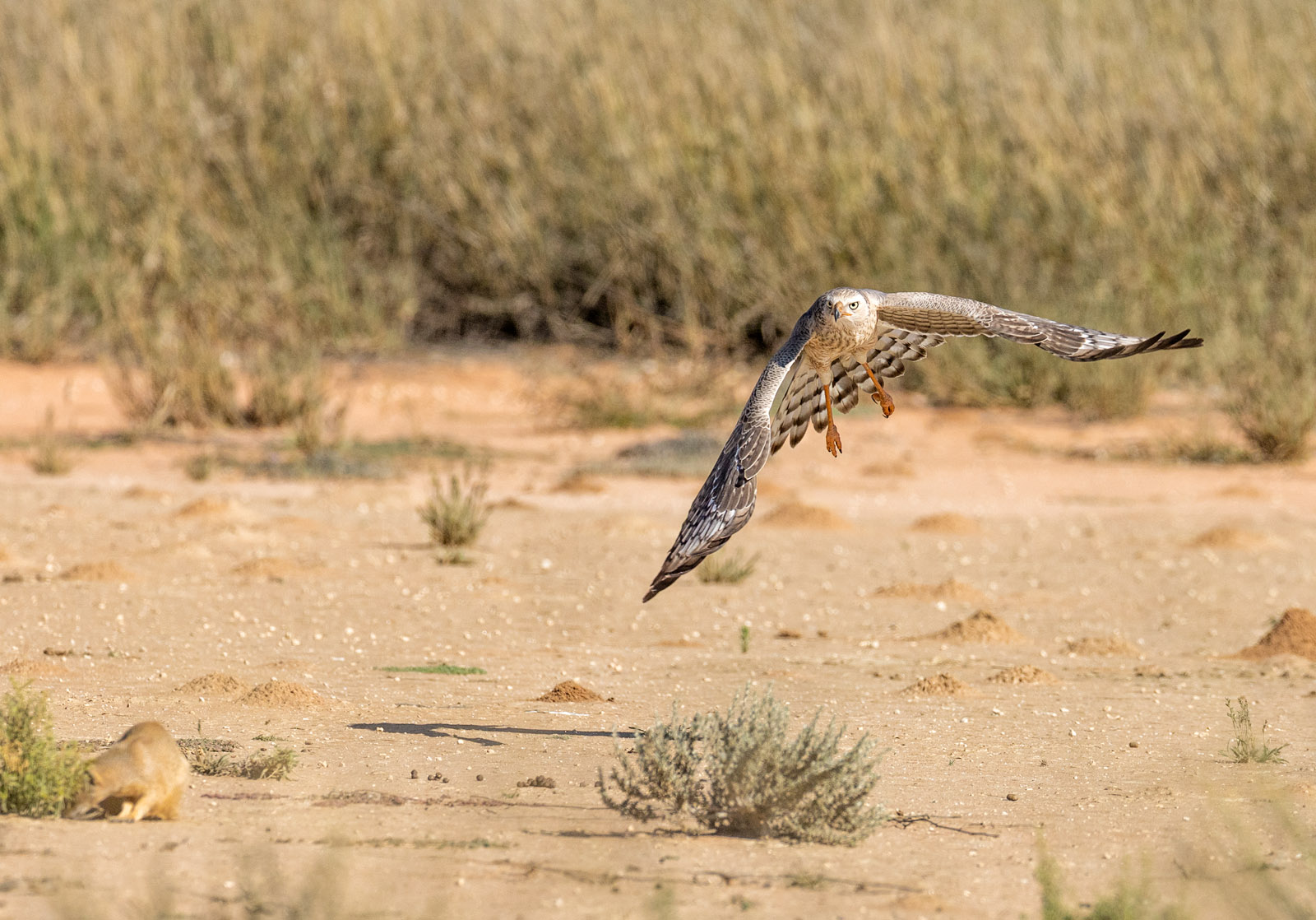
time – 10:37:32.840 200 milliseconds later
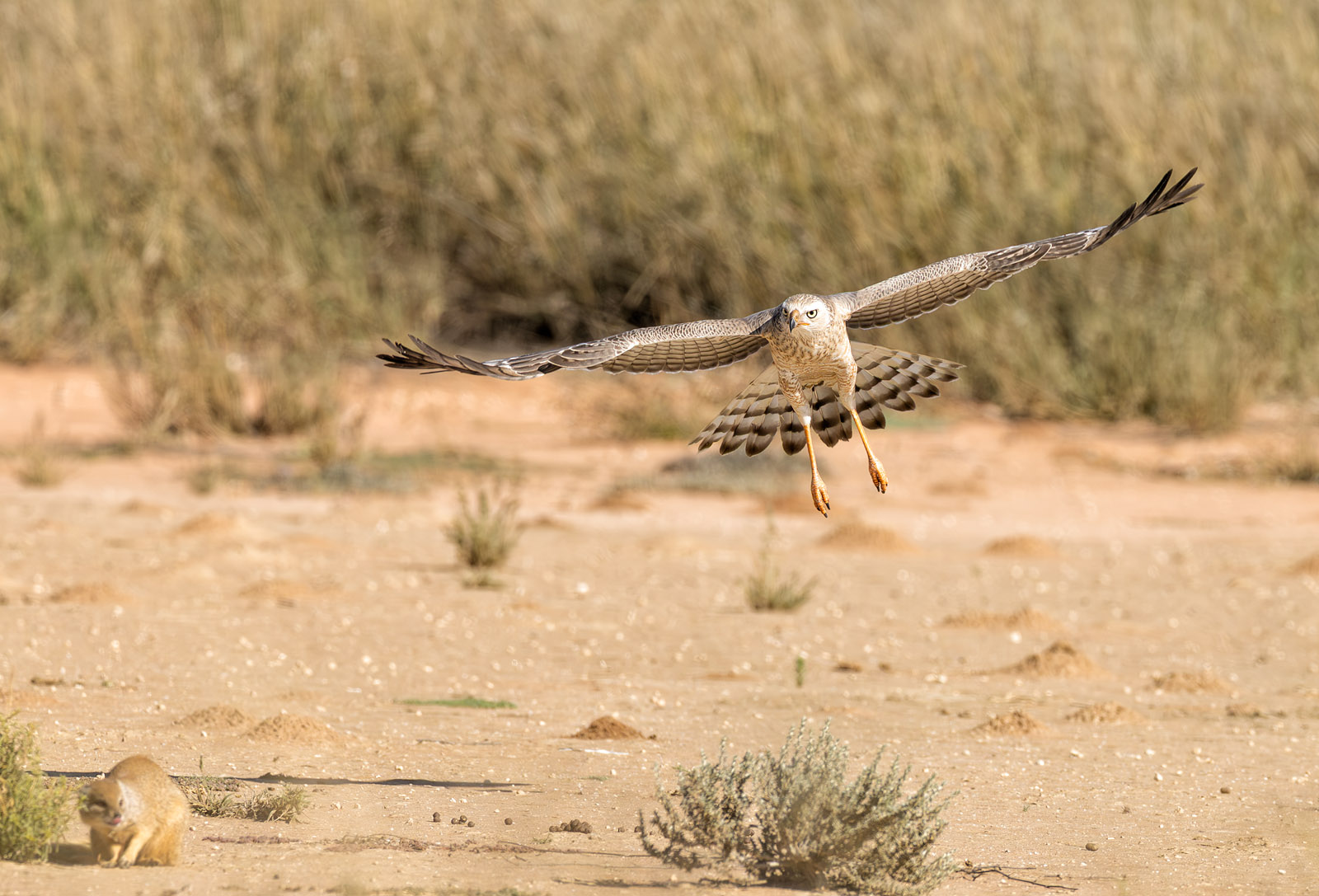
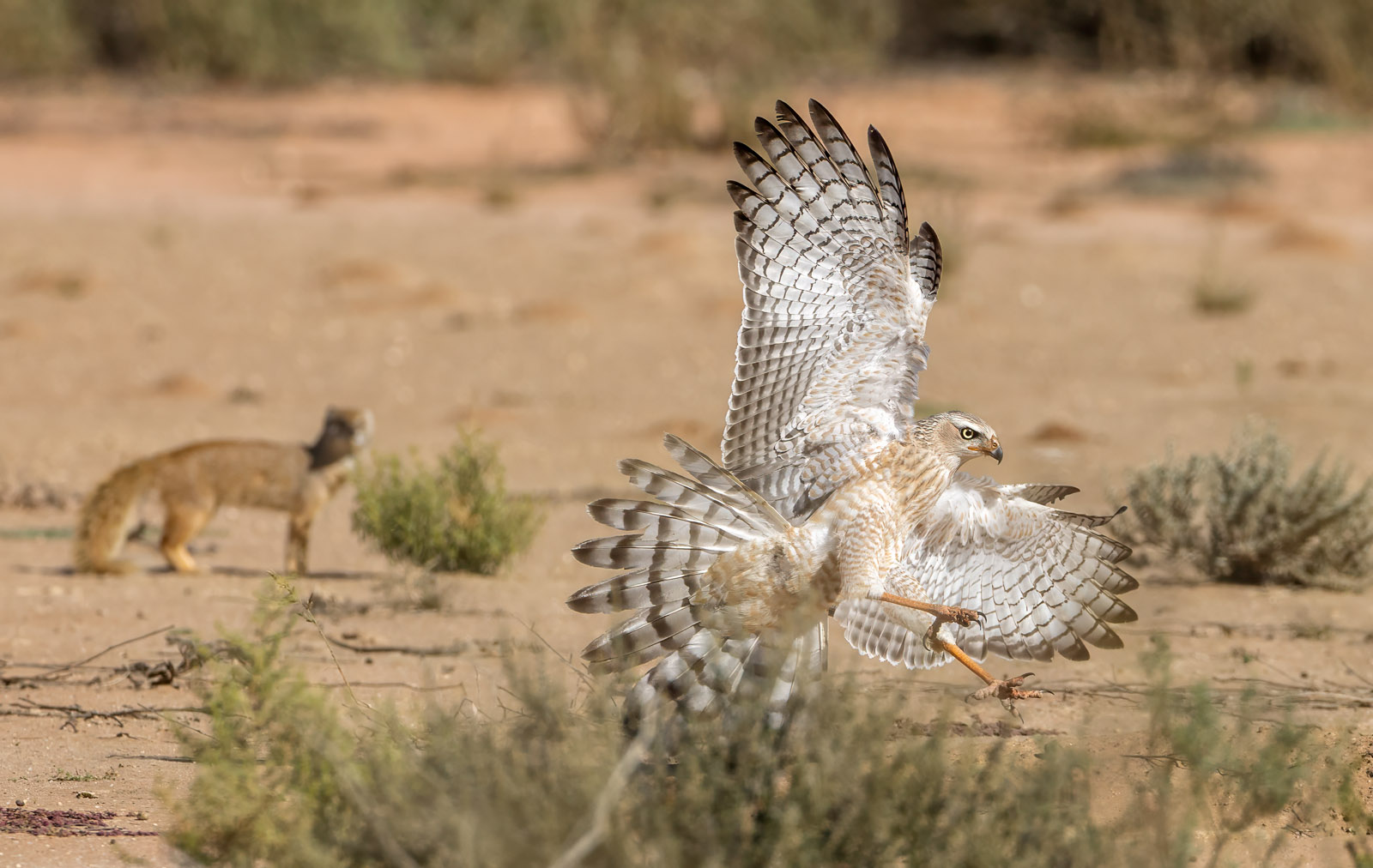
Just as the goshawk closed in to strike, the mongoose reacted – leaping into the air, baring its teeth
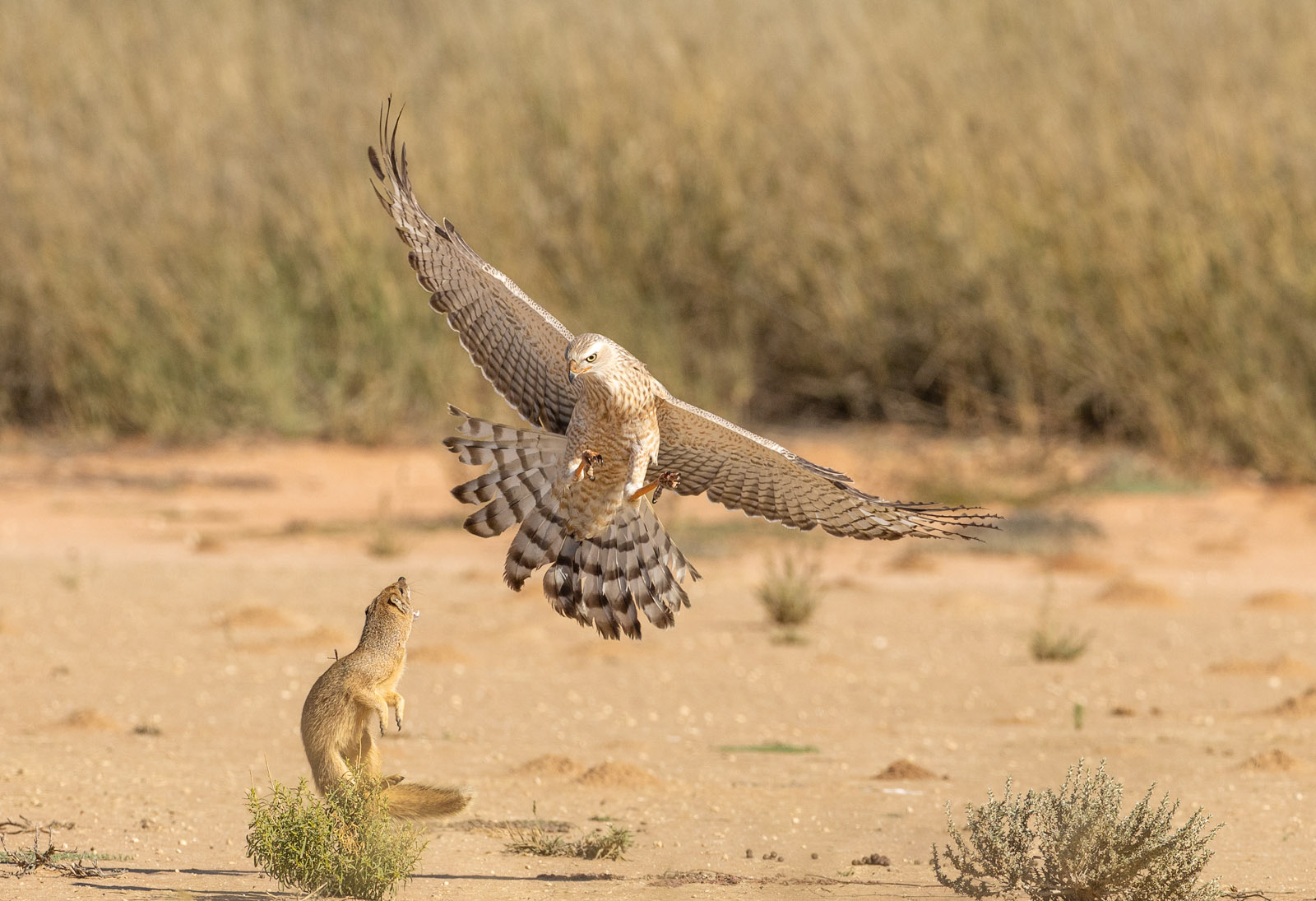
time – 10:37:33.590 550 milliseconds later
The goshawk flinched. Flaps down, undercarriage retracted, it pulled out of the strike mid-air.
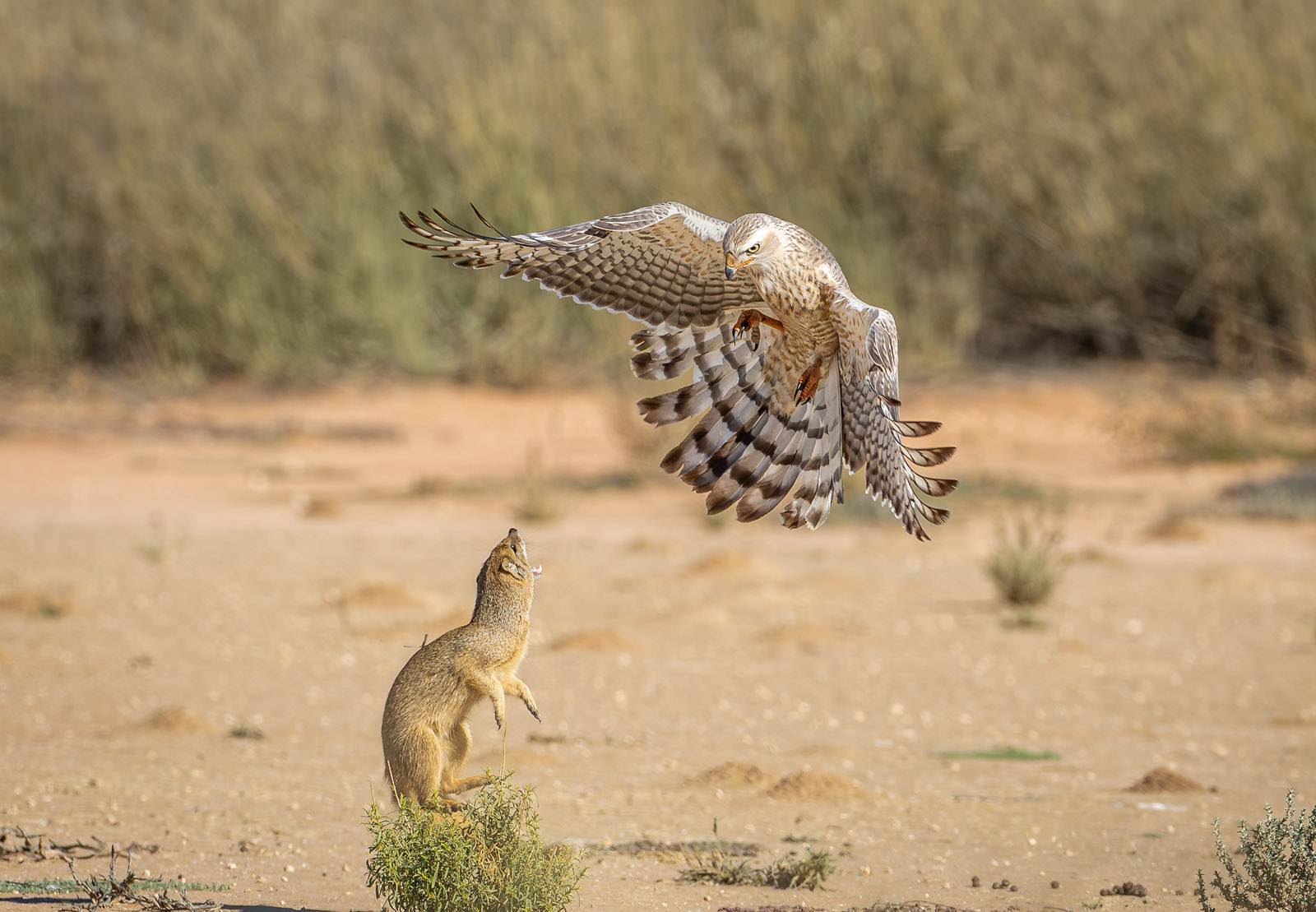
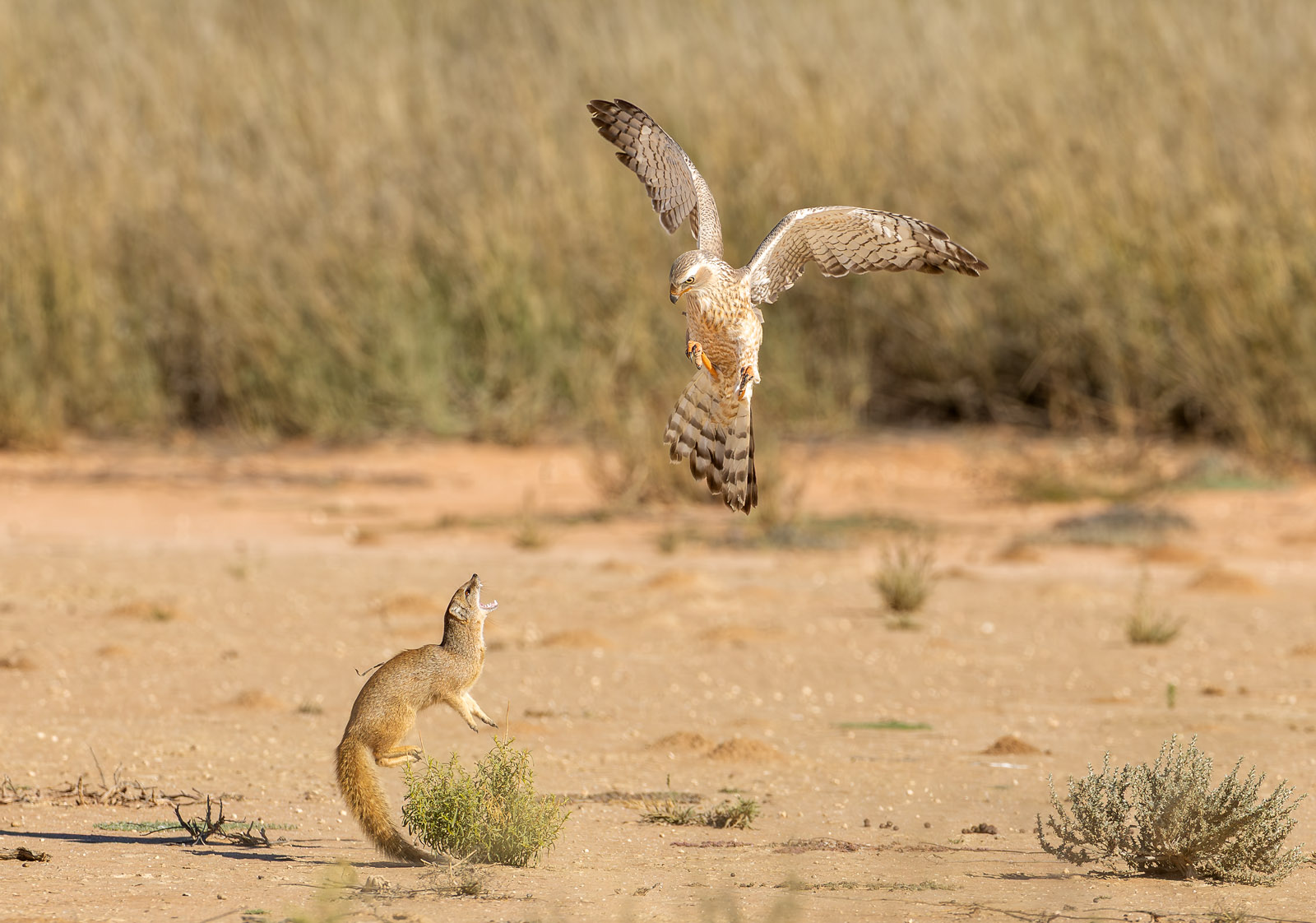
time – 10:37:33.710. 70 milliseconds later (three frames)
You can just make out the goshawk’s shadow as it passes over the mongoose, glancing down – almost as if to say “that wasn’t a good idea”
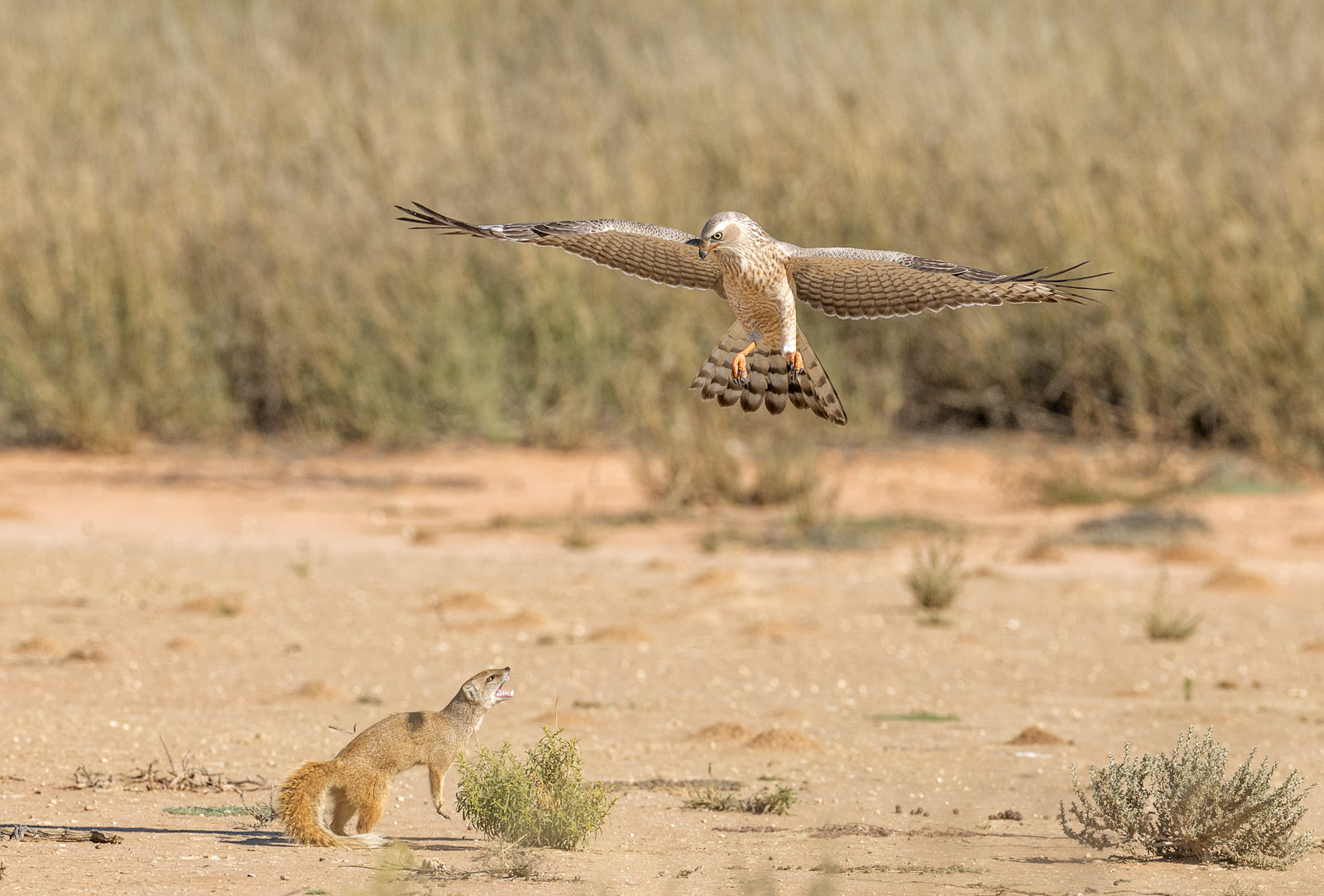
time – 10:37:33.810 100 milliseconds later (four frames)
The timing alone tells the story: the goshawk had visibly slowed in the air to avoid the confrontation..
In the next two frames, the goshawk has passed the mongoose entirely – which hasn’t budged an inch, as if to say “that was no big deal”.
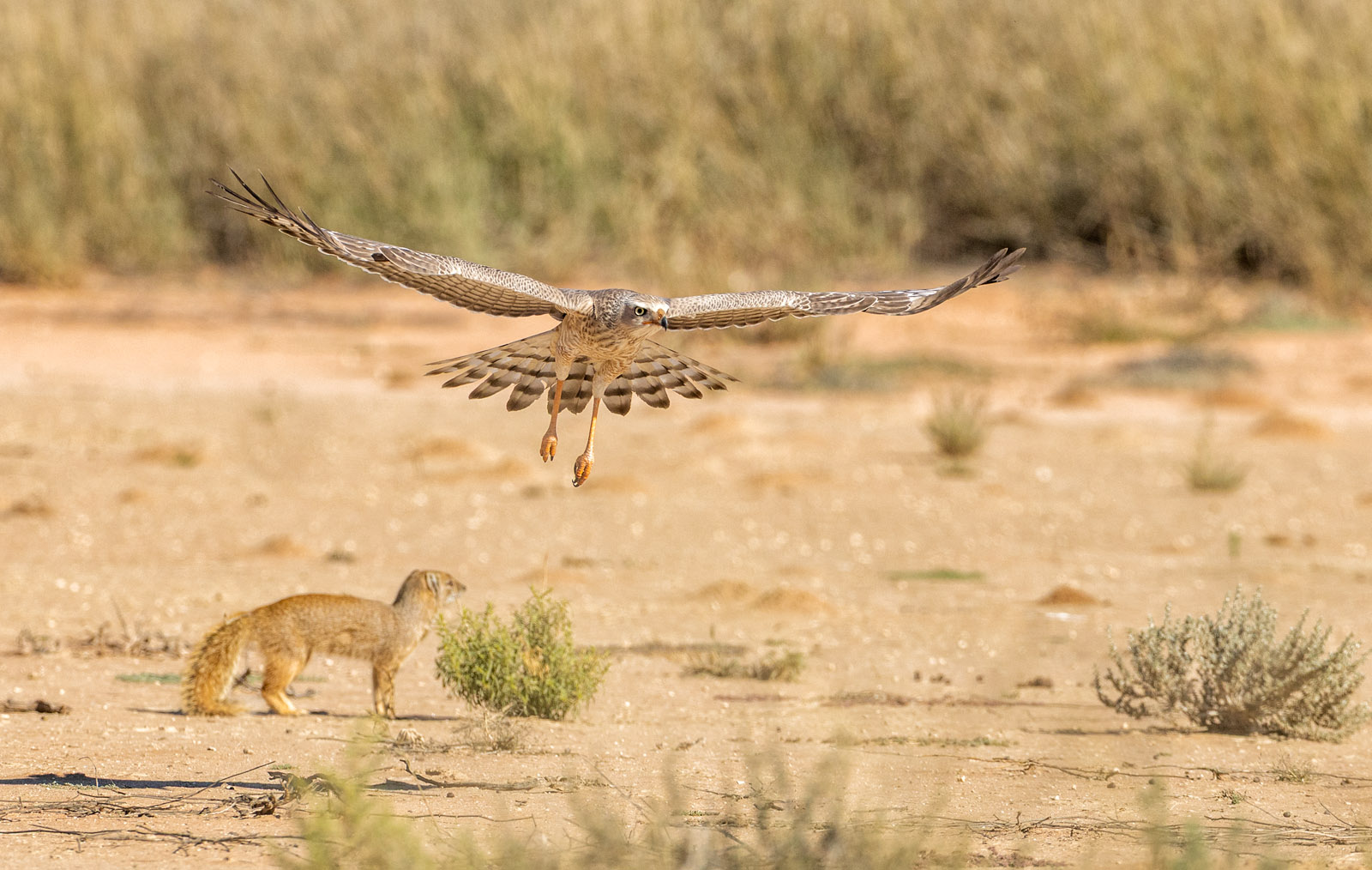
time – 10:37:34.540
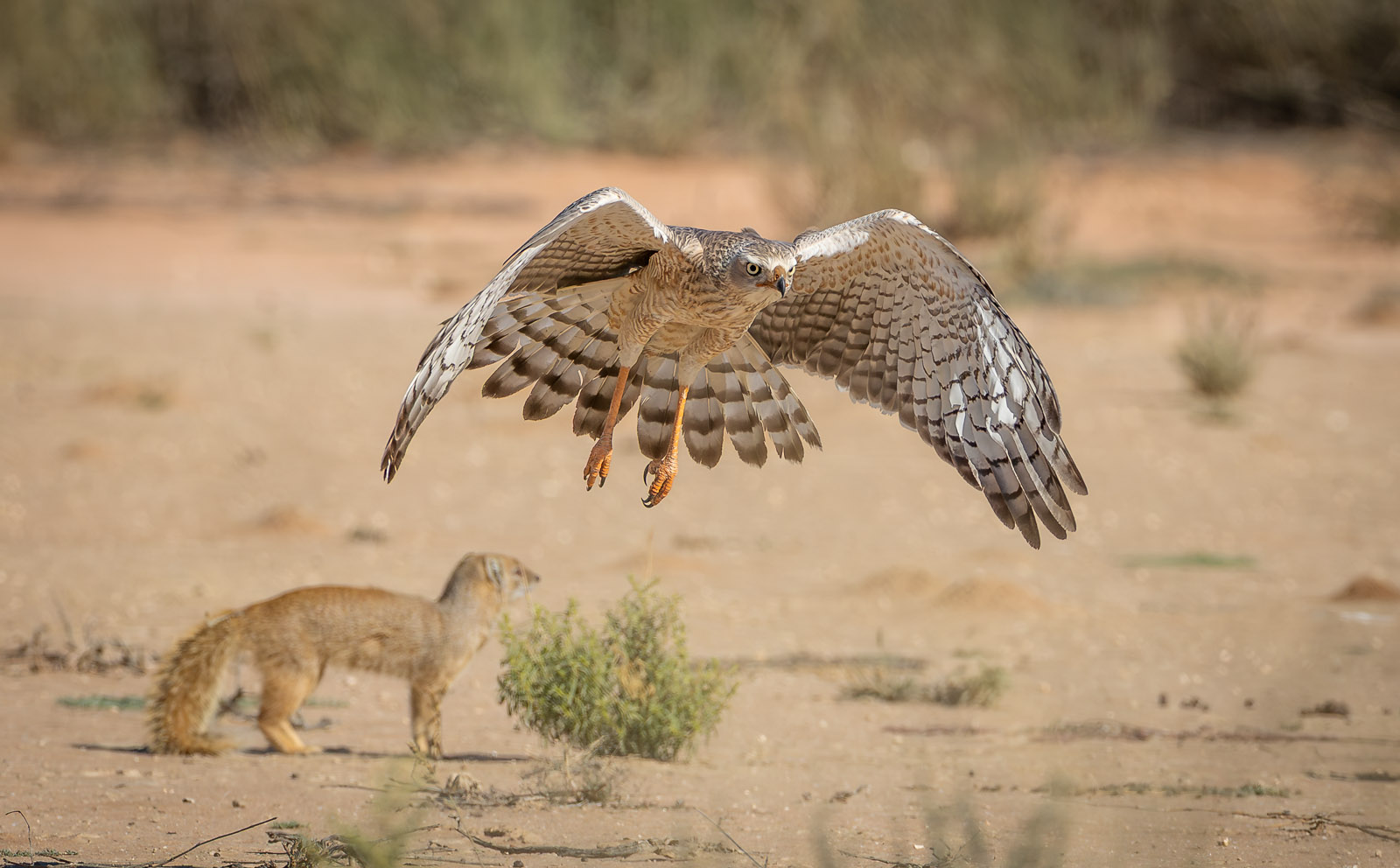
time – 10:37:34.640
From the moment the goshawk left the ground to the moment it flew clear of the mongoose, just 2.13 seconds had passed. It banked left showing off its underwings to good effect, a few low bushes between us obscured part of the tail. By then it was perhaps 5 to 6 metres past the mongoose.
The goshawk settled back on the ground and the mongoose simply carried on with whatever it had been doing before – entirely unbothered.
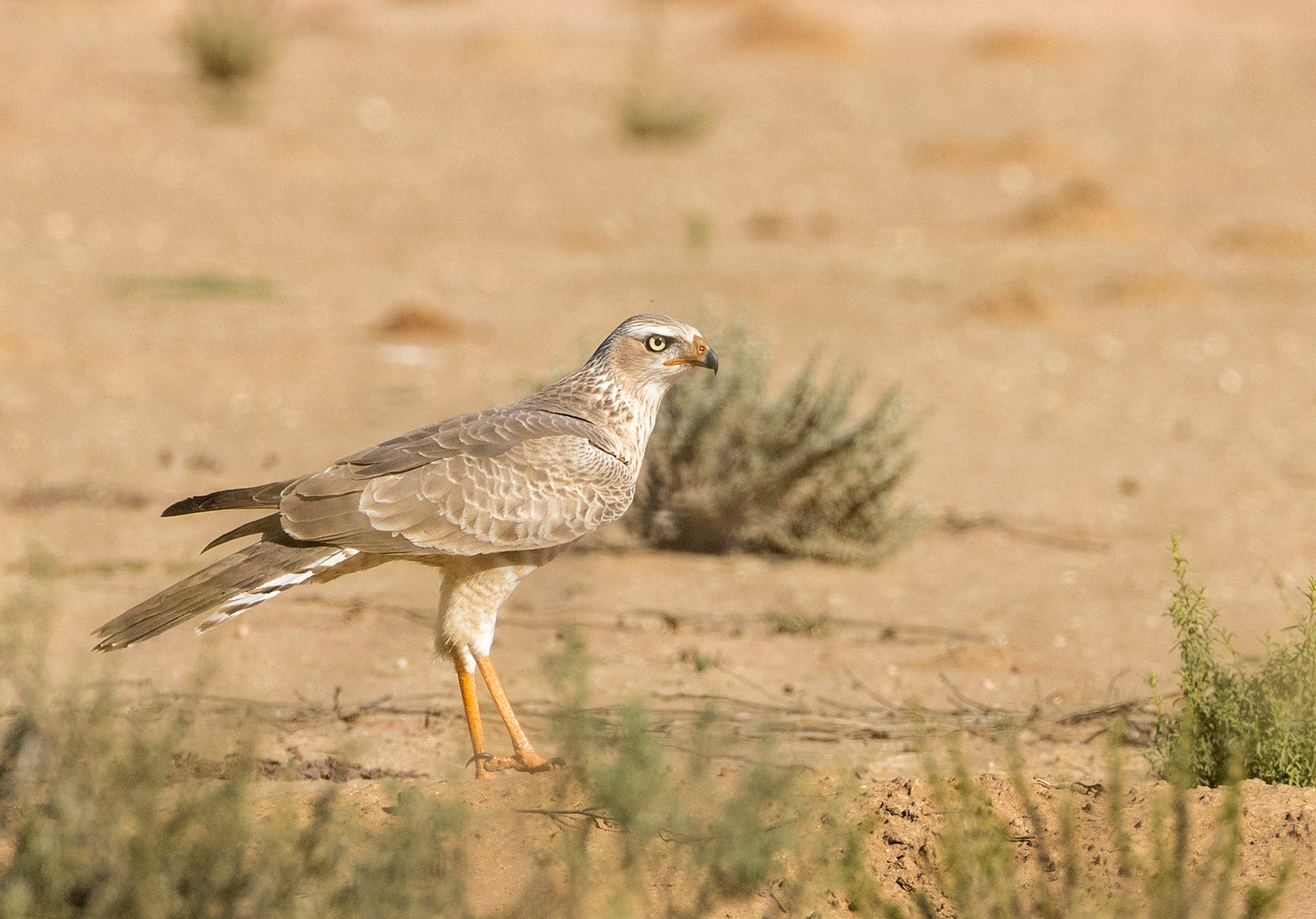
From the first frame of the goshawk perched in the tree to the moment it settled back on the ground was around 6.5 minutes – very little time to wait and watch for something to happen. What began as a fairly mundane sighting turned into something quite dramatic – the main action lasting a few seconds. A good reminder, once again, to be patient!
Info for the photographers
The above images are just a few from the full sequence. 410 images were actually captured over the whole event.
Camera: Canon EOS R1
Lens: Canon RF 400mm f/2.8L IS USM with a Canon RF extender 1.4x. – effective focal length 560mm
Support: Handheld
Exposure settings: ISO 1250. 1/4000 sec @ f/8 – set manually. All images were the same exposure.
Key camera settings: The R1 is set up using custom functions C1, C2 and C3, each one with settings for a type of photography. I use C3 for action photography. This includes three back button focus. I used the AF-ON button for focusing in this instance. It is set to shoot at 30 frames per second (fps) with a half-press and 40fps with a full-press. In this case it was full press. The timing of this sequence proved that the camera was shooting at its maximum of 40 frames per second as each frame interval was 25 milliseconds.
The AF-ON button settings:
AF-ON Mode: AF-ON2
AF-ON button: Metering and AF start
AF start position: selected point
AF Operation: Servo
AF Area: Full area
Whole Area tracking: ON
Eye Detection; ON
Servo AF characteristics: Auto
Case auto characterictics: +1
Pre-capture: enabled
These settings worked well as almost every image captured was in perfect focus, especially at the crucial moments
A great story that keeps one wanting to ‘turn the page’ to see what happens next. The photos are suburb telling their own story with the interaction between the mongoose and goshawk.