
My previous blog covered the breeding and rearing of a pair of Little Grebe chicks. (Link here. ) nIt was unsuccessful as the chicks only lasted some 14 days before being taken out by, what I thought, a Reed Cormorant. As mentioned in that blog the adult pair had rebuilt a new nest shortly afterwards and seemed to be attempting to breed and raise new hatchlings. I captured the image below on 16 November – nearly 4 weeks after the other chicks disappeared. The pair had built the nest in an exposed position which I thought was not a good idea.

By 3 December the nest had been moved to a more secluded position beneath a clump of sedge. The female was once again sitting on the nest – presumably on eggs.

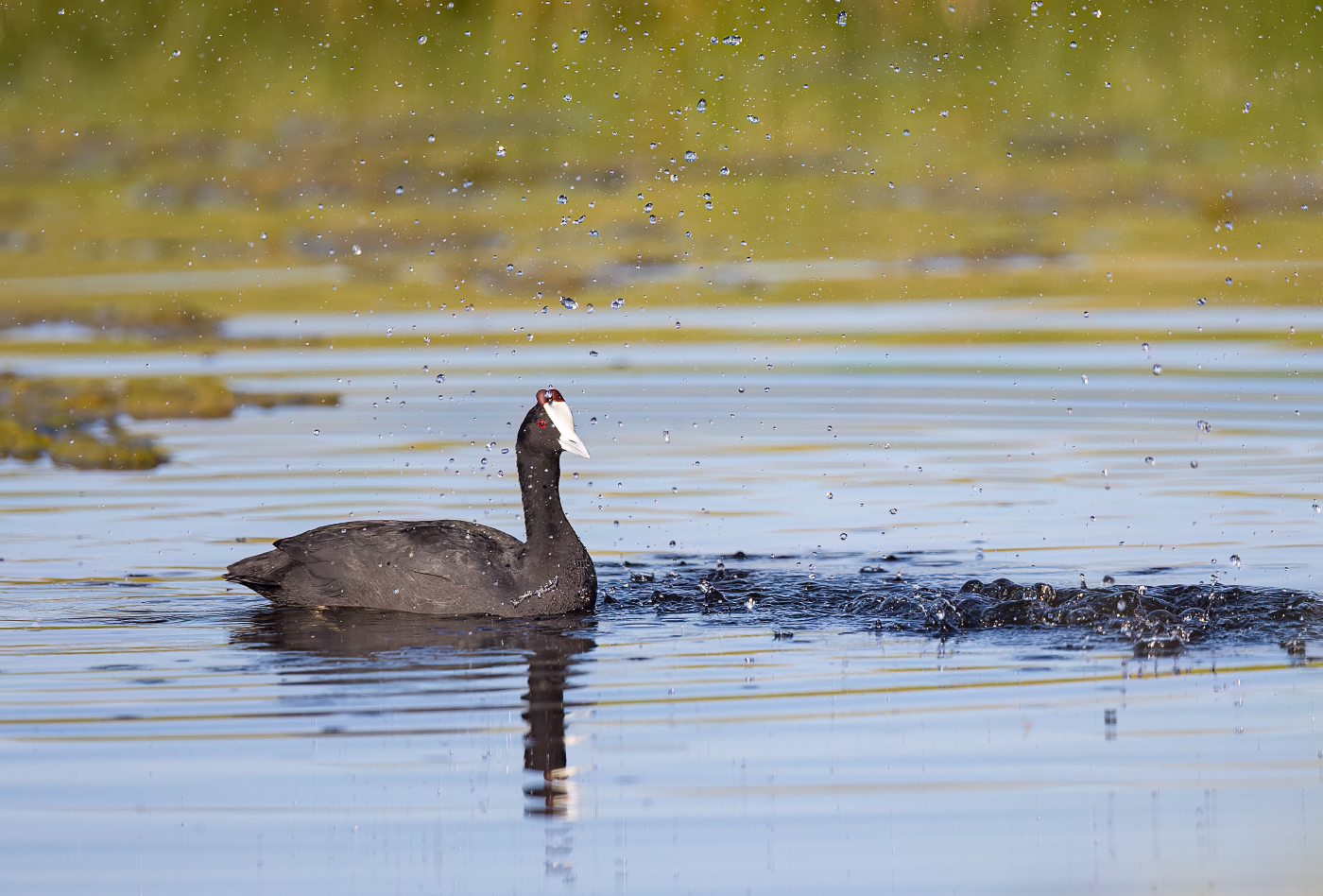
By 15 December the female waas still sitting on the nest. There was a Red-knobbed Coot on the pond that was causing consternation to the Grebes. The male Grebe would duck under the water close to the Coot and splash it. The Coot would then turn around looking for the Grebe who would again emerge close to the Coot and chase it.
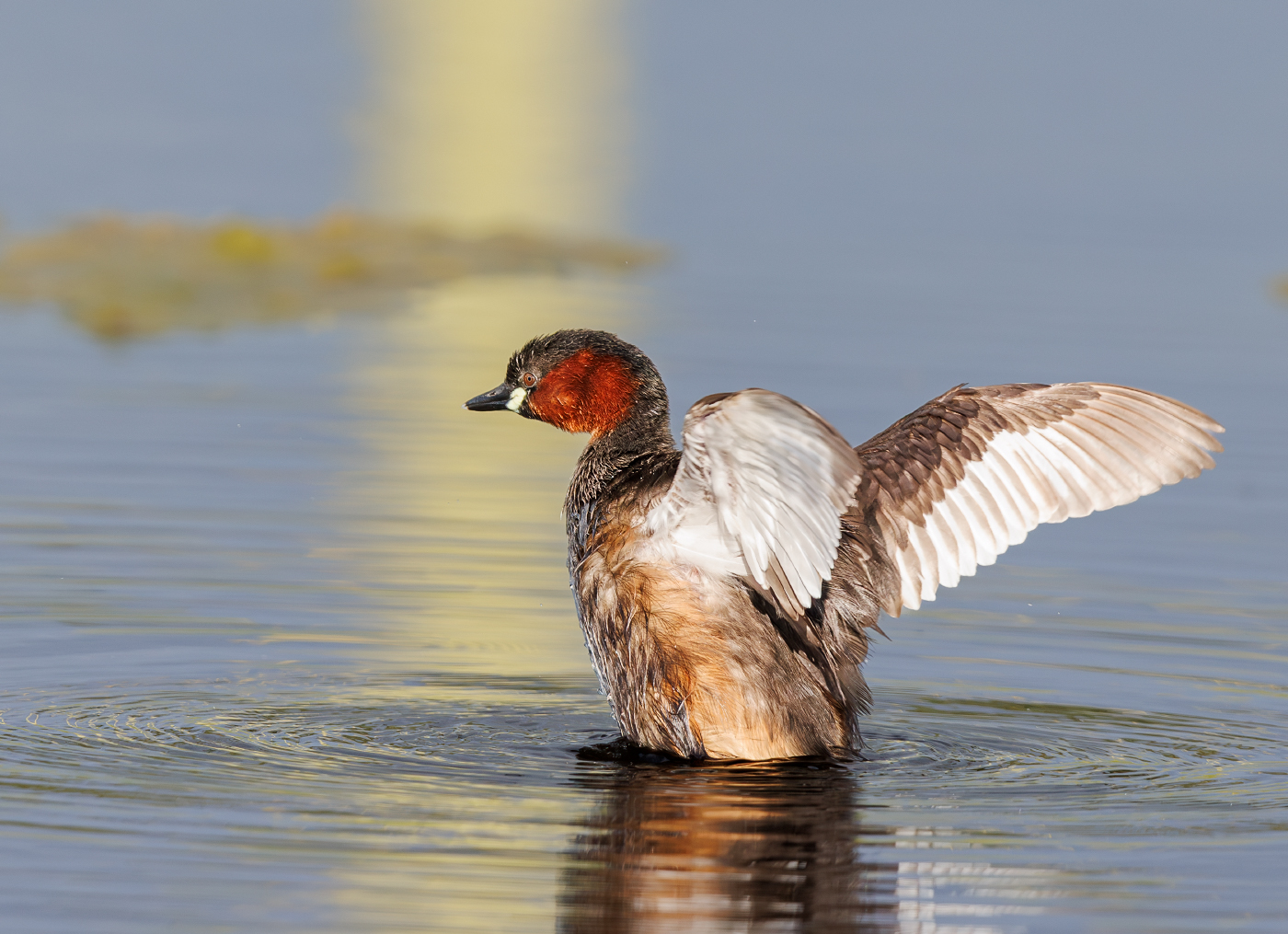
I returned each day after that and on the morning of 18 December (eggs were probably laid in the newer nest towards the end of November) I noticed only one adult on the pond and the nest was empty. This adult was diving frequently and also rising up and flapping its wings. It looked like the male to me.
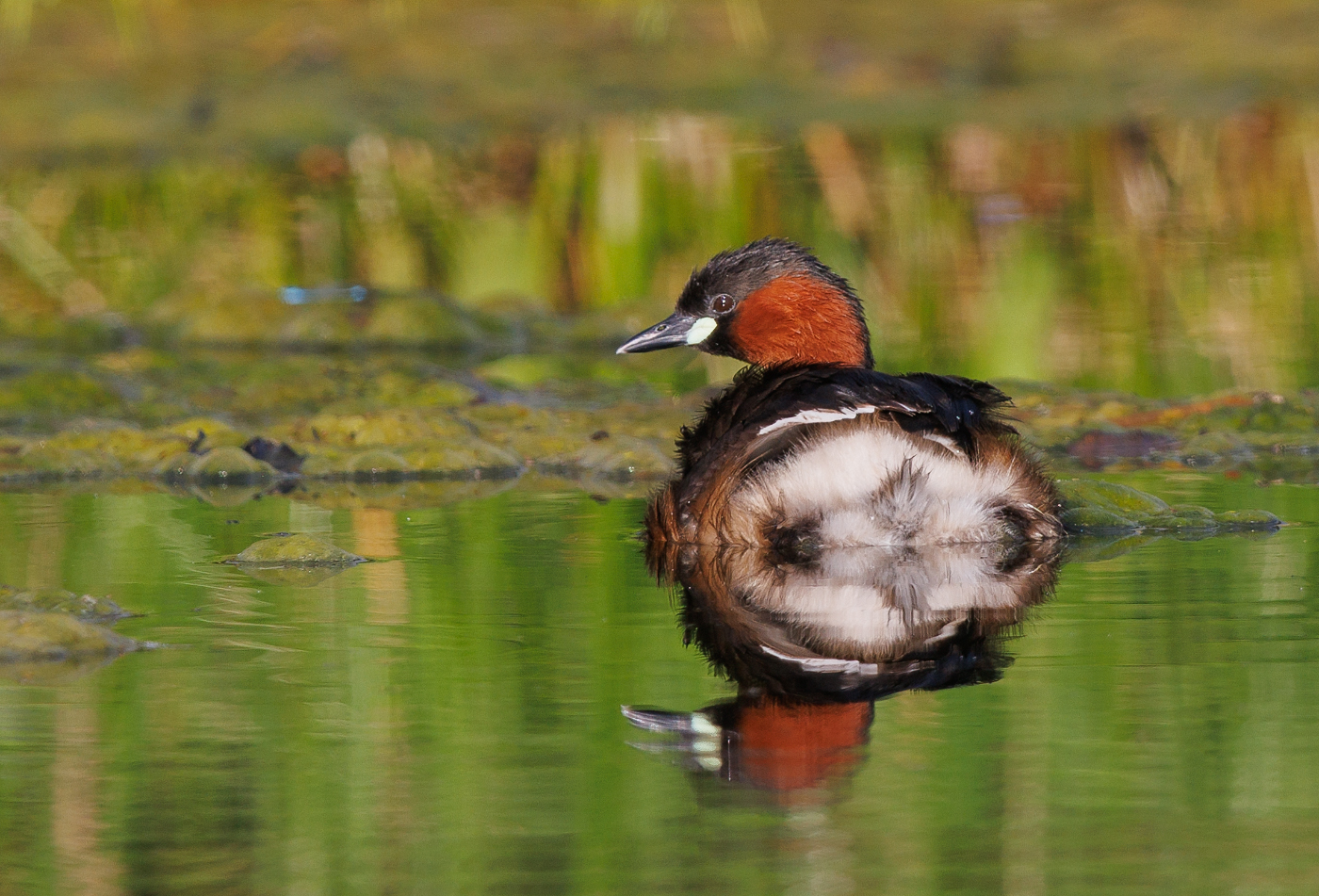
After closely examining the pond, especially amongst the algae floes, I spotted the other adult. This one was motionless and I assumed this was the female. However, there was no sign of hatchlings. I thought they had again been unsuccessful with their breeding attempt. I never observed eggs in the nest as one of the adults were always sitting on it. Had no idea how many eggs were laid.
I then saw the male approaching the female with some vegetation in its mouth. I assumed it was going to feed the female but instead as it got close to the female – out popped a small head of a chick. It had been well concealed under the female’s wing. But there was only this solitary chick.
I can only specualte about the single chick. Either only one egg was layed (unlikely) or only one egg hatched or worse still other eggs or hatchlings were predated.

I watched this feeding process a few times. Eventually the chick moved off the adult female and gingerly swam in the water, where the male and female adults kept feeding it.
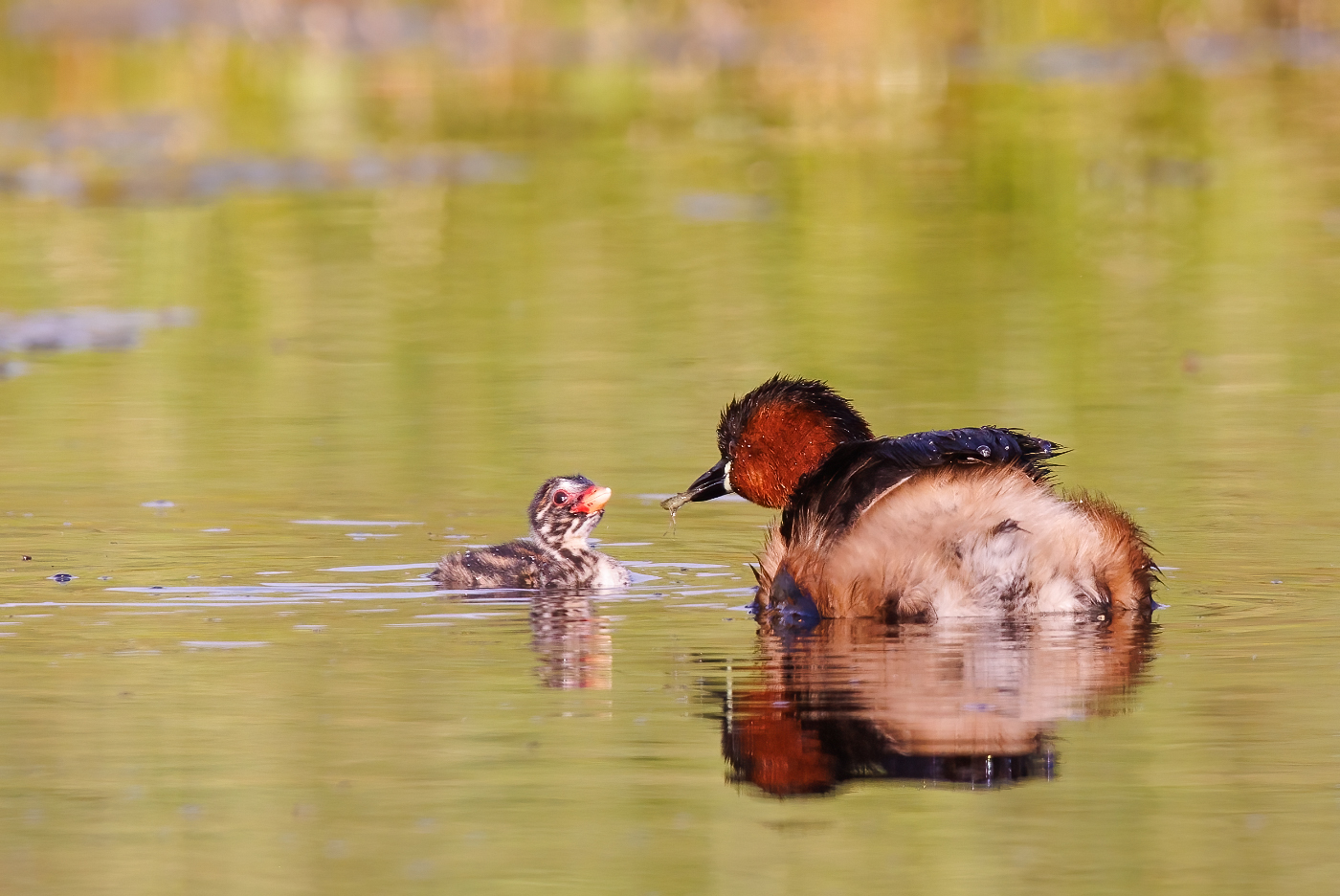

The chick wasn’t out on the water for long before it again snuggled up under the wing of its “mommy”.
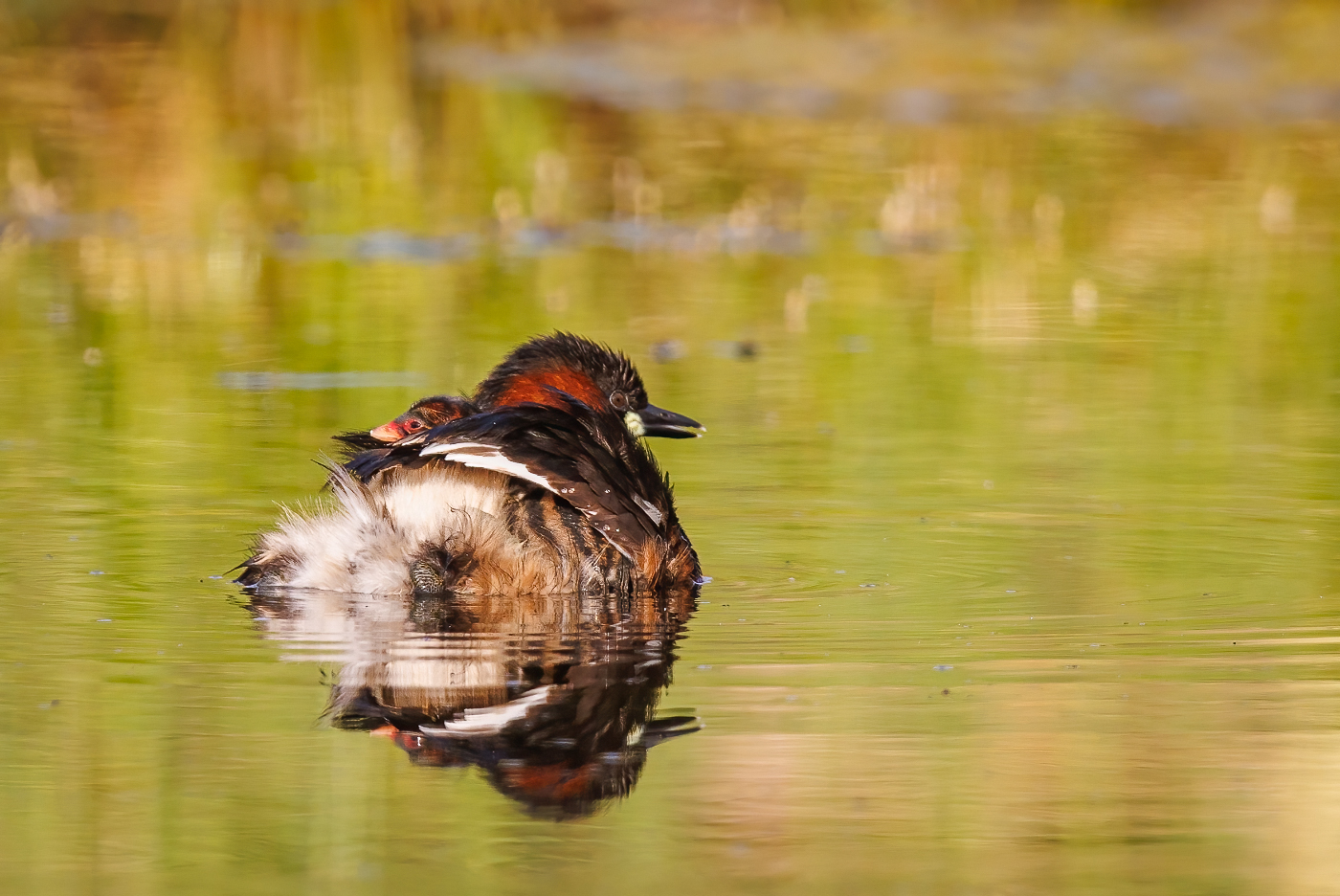
I will continue to monitor progress with this family. I trust that the parents will be more successful the second time around.
Note: All images were captured with a Canon EOS R5 and a Canon EF 600mm f/4L IS II USM lens with a Canon EF 1.4x extender III. Camera was tripod mounted.
UPDATE:
It is now about Day 24 since the single chick was hatched at the second breeding attempt. All seems to be going well. The hatchling is now about double the size and is mostly swimming about on the water with the female adult. She is very busy diving and feeding what appears to be a voracious appetite.

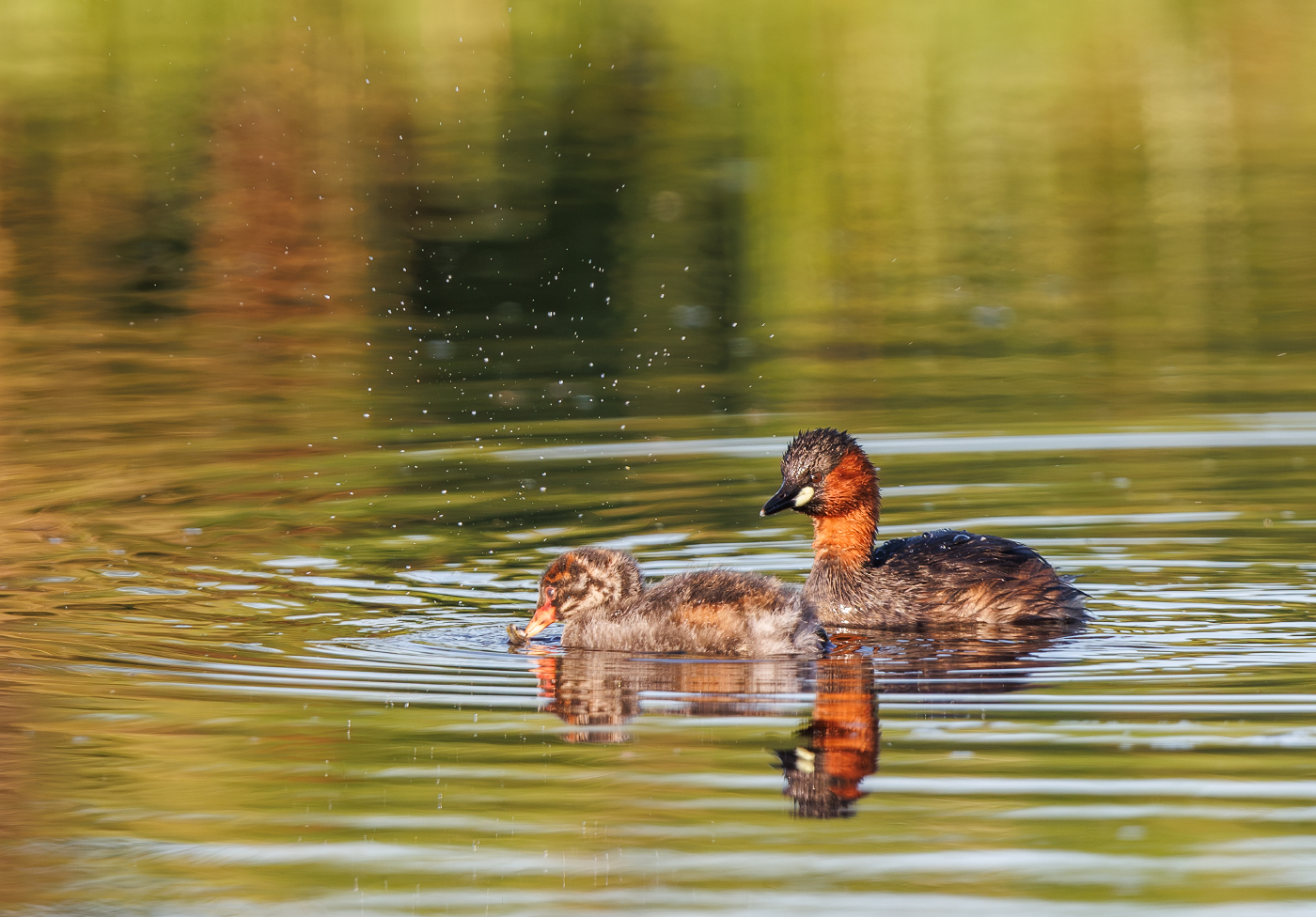
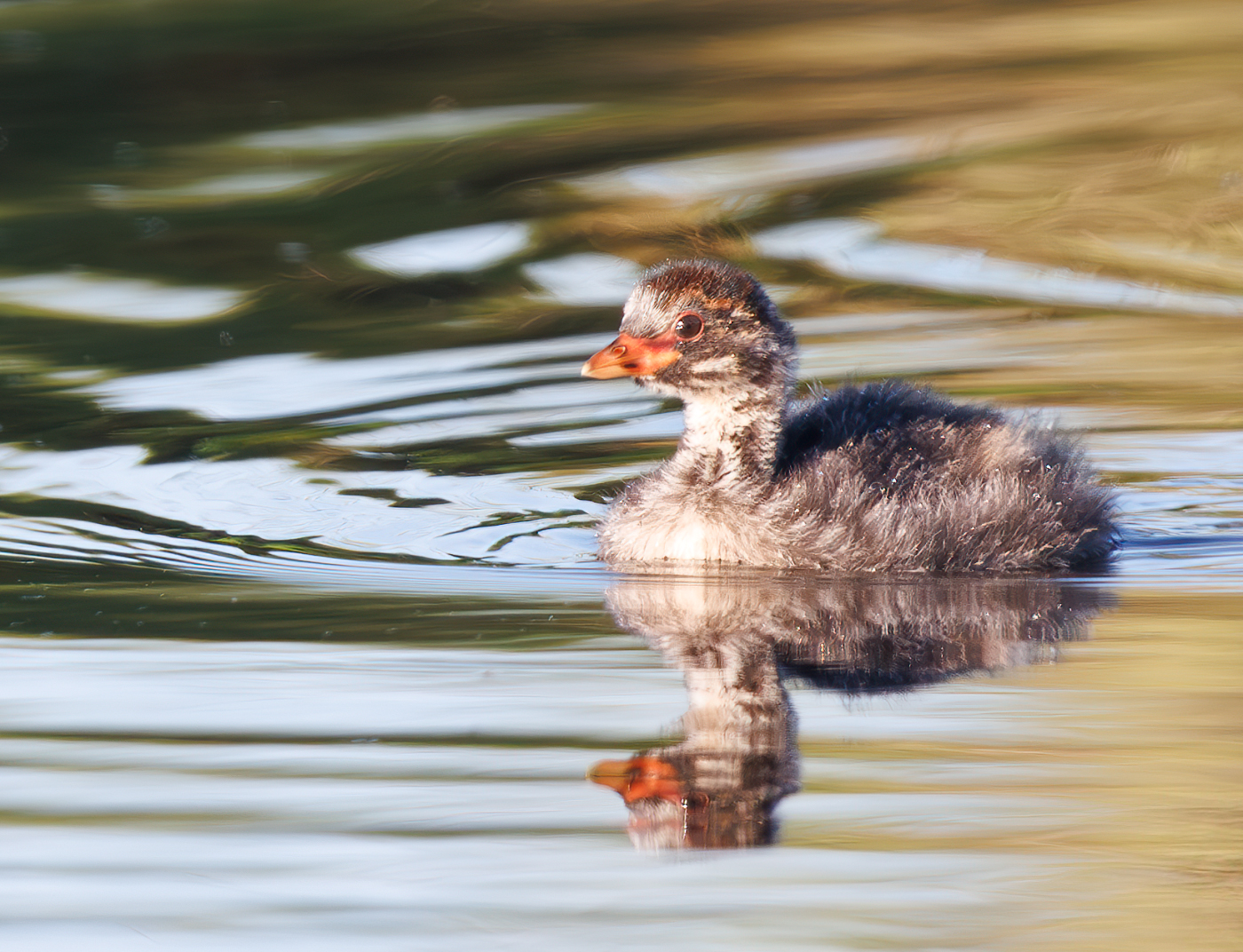
From what I have observed, it seems that the male adult takes a far smaller role in the care and feeding of the chick at this stage. It just seems to nonchalantly drift around the pond – diving and feeding itself.
Final Update 23 Jan 2024
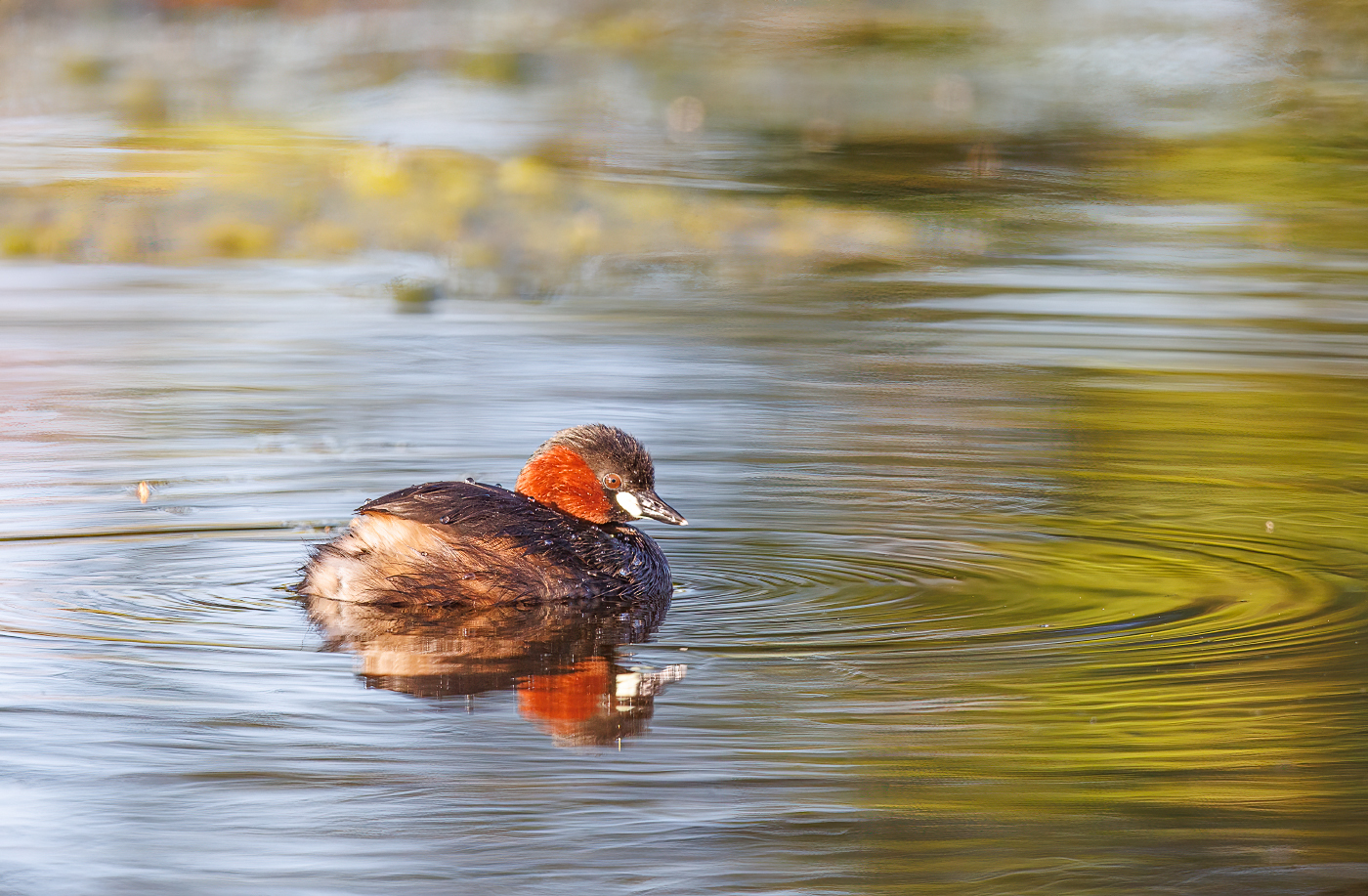
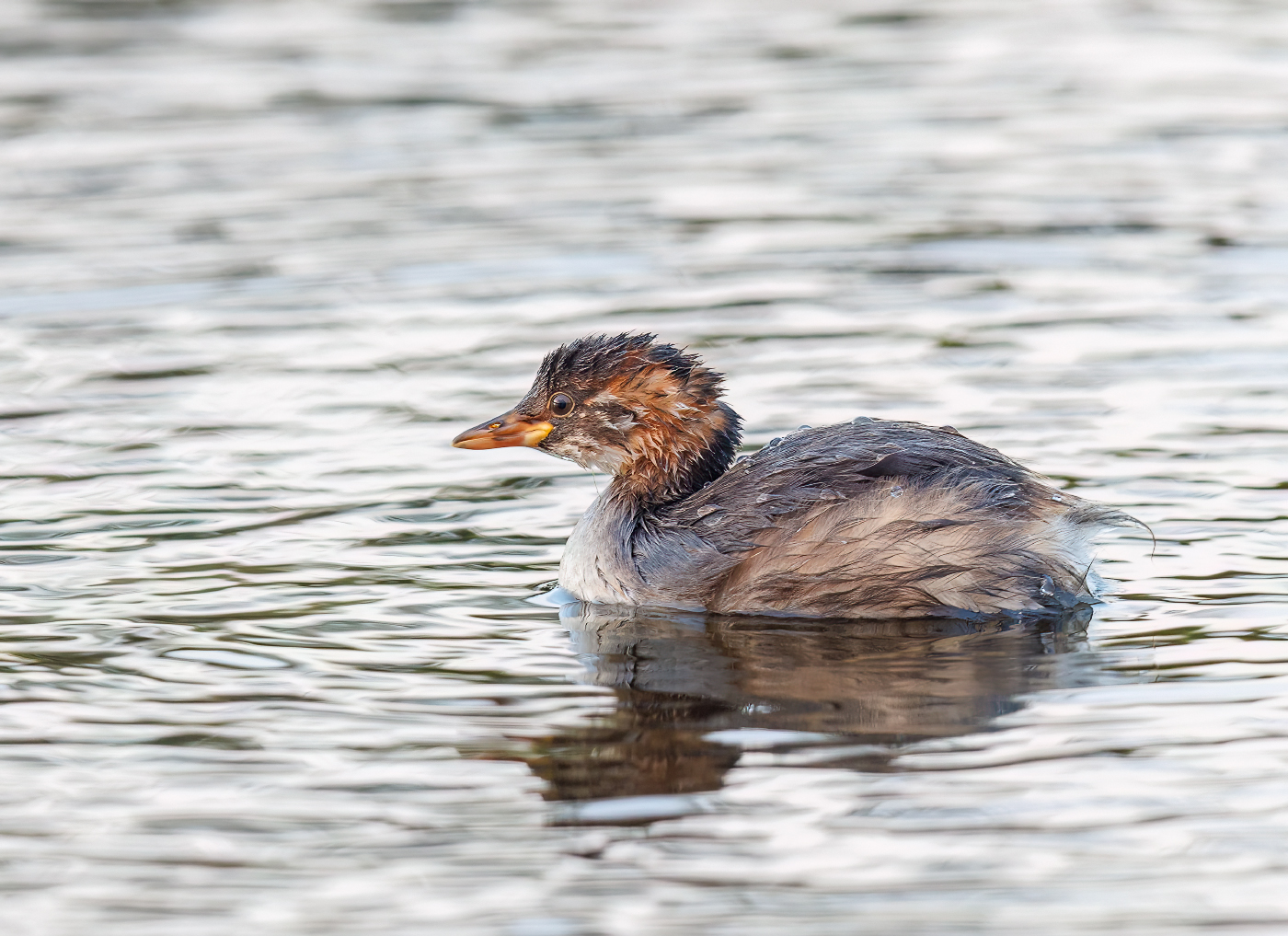
It is now 37 days since the estimated hatching day and it looks like this was successful. The single hatchling is now a juvenile. It is feeding itself by frequently diving for food and swims alone all the time. It is now about 3/4 the size of the adult and the colouring is changing.
The only other observation is that it would appear that the male adult is no longer on the pond – just the female, who seems to let the youngster get on with it.
So finally after the second attempt this season, and only raising a single chick, breeding was a success.
Sad, but lovely series.